

What's NEW
June 29, 2021:
Hello Again
The last few months have not been pleasant for me, even taking COVID-19 into acount. I am still recuperating, after six months, from my third knee surgery (a “revision” for my left knee to fix what wasn’t fixed in the two “replacements” that preceded it). How long has it been since I got on this merry-go-round? Going on three years, I think, although I am losing track. It’s tempting to say the hell with it and get off, but as the chronic pain and stiffness in my left leg keep reminding me, that would be no solution at all. There’s also the encouraging success of my first surgery, in April 2019 (same surgeon, same hospital, different knee). So I’ll keep at it, even though I’m sick and tired of being sick and tired as a consequence of my surgeries. Breathing life back into my website has seemed too difficult a task until my knee woes are finally under control, but I did decide to have a go at a review of Reid Mitenbuler’s Wild Minds, which I read in the hospital and in rehab. Don’t read it if you care about old cartoons and you have blood pressure issues.
Permanent Link and Comments (0)
Wild Minds
Reid Mitenbuler's Wild Minds: The Artists and Rivalries That Inspired the Golden Age of Animation (Atlantic Mothly Press) borrows heavily—and often carelessly—from other books, my own Hollywood Cartoons and The Animated Man among them. Its abundant errors have been cataloged by properly indignant cartoon buffs (see, for example, Harry McCracken’s and Thad Komorowski’s posts on the amazon.com page for the book), but Wild Minds has somehow attracted favorable attention from several eminences among cartoon scholars, and even from The New Yorker, which devoted a feature article by Adam Gopnik to the book. (If memory serves, Hollywood Cartoons got one sentence at the front of that magazine twenty years ago. Yes, of course, I’m envious, especially since I have no doubt that mine is much the better book.)
Wild Minds self-destructs most embarrassingly in its note on sources, where Mitenbuler says, “In a handful of places, I extended the details of a scene slightly beyond spoken and written accounts of it, drawing reasonable conclusions from the available information.” Outside rarefied publishing circles, that is known as makin’ stuff up, and no good historian does it.
About errors: every writer of serious nonfiction makes mistakes. You’ll find lists of my errors on the pages on this site devoted to each of my books. As often as possible, I correct such mistakes in subsequent printings or new editions. Oxford University Press has asked me to prepare a new and enlarged edition of Hollywood Cartoons, and I’ve been accumulating corrections and second thoughts in anticipation of reworking that book. In doing that, I’ve relied on the very extensive files I assembled in work on the original edition, including the transcripts of the hundreds of interviews that Milt Gray and I recorded with cartoon people.
Needless to say, research of the latter kind was not possible for Mitenbuler, since almost all the people who could have been valuable interview subjects for him were long gone when he started work. Archival research was more problematic, too, particularly since the doors of the Walt Disney Archives, the most important resource, have been closed to outside researchers for many years. Mitenbuler’s in-person archival research may have been limited to the John Canemaker Collection at New York University. He cites documents in collections at other institutions, but often those citations appear to be second hand.
There’s nothing automatically disqualifying about such limitations. Think of all the biographies whose subjects have been dead for decades if not for centuries, and about whose lives there are great gaps in documentation. Or maybe there is documentation, but not enough to settle conclusively some of the most interesting questions about the people involved. There’s no need to invoke names like Shakespeare and Dickens in such a discussion, not when there’s a live bonfire raging over the literary remains of the recently deceased novelist Philip Roth.
What’s most needed in such situations is thoughtful examination of what has in fact survived. In this case, that would be not just published interviews and other such material, but, especially, the cartoons themselves. What Mitenbuler offers instead is, among many dubious things, three pages on Popeye’s role in peddling spinach, and more citations about “film mogul Adolph Zukor,” an incidental figure in animation’s history, than about Tex Avery, who was anything but incidental. Other important figures are mentioned only in passing, if at all.
So, skip this one..
Permanent Link and Comments (0)
Onward
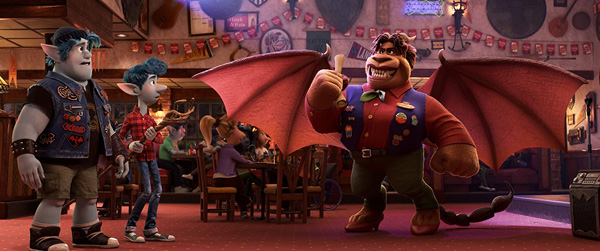
I just missed this latest Pixar feature when the pandemic closed theaters last March, but thanks to Disney + (yes, I've subscribed, how could I resist) I've now seen it twice. This is Pete Docter's debut feature as John Lasseter's successor as Pixar's creative head (the Pixar veteran Dan Scanlon directed), and I wish I could recommend it. The disabling problem is the fundamental miscasting, not of the voice actors, who are OK, but of the characters themselves, and the roles they're assigned in the story. Ian, the younger of two elf brothers and the central figure in the quest that passes for a plot, is simply too weak a personality to bear the load he has been assigned, and his older brother, Barley, is too shallow and noisy to take up the slack. Flip the two characters, though, so that Ian is the older and more mature of the brothers, and Barley the reckless kid brother, and you might have something. Instead, we have Ian's constant whimpering and Barley's feckless swagger, with not enough comic support in the writing for either brother.
A pity, because the basic conceit—the world of the film is the world of classic mythology, corrupted and diminished not by some breach of divine law but by electricity and its conveniences—is perfectly workable. Little unicorns rooting in garbage like alley cats, a manticore (voiced wonderfully by Octavia Spencer) as the proprietor of a Chuck E. Cheese-lookalike, biker sprites, and so on--all this works, for me, as a sort of degenerate version of the Pastoral Symphony in Fantasia, just not well enough to make up for the fundamental mistake.
At least Onward isn't, not quite, a victim of the religiosity that has infected other Pixar features and dominates the dreadful creationist fable The Good Dinosaur. Onward is, by default, a pagan story; that's what you get when you stir elves and other rmythical creatures into a plot that turns on the boys' efforts to resurrect their dead father (a victim of cancer, that least amusing of diseases) for twenty-four hours. Their task is complicated by the failure of a magical staff to retrieve more than the lower half of Dad's body from whatever afterlife he is now inhabiting. Where has he gone, and to where is he returning? What would it be like to have a dead parent reappear? The film doesn't tell us; we get only a long-distance view of Barley talking with his father before Dad returns to wherever he has been. In other words, Onward dodges the questions that might—but, granted, probably wouldn't—have made it worth watching. I hope for better from the next Pixar feature, Soul, but the previews, dwellling as they do on the afterlife and inviiting comparisons with the likes of Coco, are not encouraging.
Permanent Link and Comments (1)
June 5, 2020:
Raskolnikov's Dream
It has been almost four months since I last posted here, a period that I've devoted in part to reading (in Sidney Monas's translation) the great 19th-century Russian novel Crime and Punishment, by Fyodor Dostoyevsky (at the right). While sick, he had dreamed the whole world was condemned to suffer a terrible, unprecedented, and unparalled plague, which had spread to Europe from the depths of Asia. Except for a small handful of the chosen, all were doomed to perish. A new kind of trichinae had appeared, microscopic substances that lodged in men's bodies. Yet these were spiritual substances as well, endowed with mind and will. Those infected were seized immediately and went mad. Yet people never considered themselves so clever and so unhestitatingly right as these infected ones considered themselves. Never had they considered their decrees, their scientific deductions, their moral convictions and their beliefs more firmly based. Whole settlements, whole cities and nations, were infected nd went mad. Everybody was in a state of alarm, and nobody understood anybody; each thought the truth was in him alone; suffered agonies when he looked at the others; beat his breast; wept and wrung his hands. They did not know whom ro bring to trial or how to try him; they could not agree on what to consider evil, what good. They did not know whom to condemn or whom to acquit. People killed each other in a senseles rage. Whole armies were mustered against each other, but as soon as the armies were on the march they began suddenly to tear themselves apart. Their ranks dispersed; the soldiers flung themselves upon each other, slashed and stabbed, ate and devoured each other. In the cities the alarm bells rang for a whole day. Everybody was called, but nobody knew by whom or for what, and everybody was on edge. ... Fires blazed up; hunger set in. Everything and everybody went to rack and ruin. There is more in the same vein, but you get the idea. You may detect a resemblance between the dream and our current state of affairs, the dream lacking mainly an analog to the vicious fraud in the White House.
I'd planned to take Crime and Punishment with me on a birthday trip for Phyllis in March. We were going first to San Francisco, then to Maui for six days, and then back home via Los Angeles (and Sunday dinner with Jenny Lerew at Musso & Frank Grill in Hollywood). Thanks to the coronavirus, the bottom fell out a few days before our scheduled departure, and we felt fortunate to get refunds for most of the cost of the trip.
When not reading Dostoyevsky, and while looking for something to do besides household chores, I've not been watching cartoons. No Disney +, no HBO Max. Instead, I've spent many hours watching the Metropolitan Opera's free streaming of dozens of performances, most from the "Live in HD" series that has been showing in theaters for the last fourteen years or so. Sometimes there's actually a strong cartoon connection (as with a colorful production of Rossini's version of Cinderella), other times there's what strikes me as a cartoon flavor (the first act of the Met version of Verdi's Masked Ball feels like a Talkartoon come to life), and, of course, there's the music from operas that Carl Stallling and Milt Franklyn found so useful in the Warner cartoons.. If you've seen Friz Freleng's Back Alley Oproar, you've heard the famous sextet from Donizetti's Lucia di Lammermoor, and you are perhaps familiar with a modest Chuck Jones cartoon called What's Opera, Doc? That's a joke, son.
I'm reminded, while watching all these operas (some wonderful and some not so wonderful, but almost all of them worth watching at least once) of how much more of a presence opera and other classical music used to be in American cultural life. But I don't fret much about the lack of interest in the music among many if not most young people; I think it's best to grow into classical music in general, opera especially, and the music will survive even as its audience shrinks and expands.. Me, I'm grateful that the Met has used the pandemic as the occasion for letting me and millions of other people see dozens of operas that I knew only by name, if at all. And yes, I did express my appreciation with a donation to the Met, and I'll send another one soon.
Permanent Link and Comments (2)
June 5, 2020: My previous post under this title referred to R.C. Harvey's failure to recognize, in his annotations for Fantagraphics' reprinting of the complete Pogo, that George Y. Wells was a real person whose identity was easy to track down, not a name that Walt Kelly made up. There's an even odder annotation in the same Pogo volume, the sixth. Harvey writes, in his entry for December 4, 1960, about the name "Kathleen" (also "Kathe Kelly") on one of Pogo's skiffs:
"'Kathleen' may be a fond Irish recollecton of Kathryn Barbara, Kelly's daughter who died in infancy in the fall of 1952 before reaching her first birthday Biographer [Steve] Thompson explains this poiignant reference ... 'For many years in late October, Kelly would draw a bug floating through the swamp with a birthday cake, trying to find someone looking for a birthday." It's no longer 'late October,' but the reference seems a propos. 'S'more' [lettered on the skiff] may be a plea for more time for his daughter, whose shortened name, 'Kathe,' appears with 'Kelly' on the stern of the skiff in the next panel."
The problem here is that "Kathleen" is the name of the eldest of Walt Kelly's three children by his first wife, Helen. As far as I know, Kathleen has never been involved with the comic strip or other Kelly enterprises, unlike her siblings Carolyn and Pete, but to conclude that the name on the boat is not hers but that of another Kelly daughter requires some tortured reasoning, which Harvey unfortunately provides.
{A September 14, 2020, update:
I learned recently that Kathleen Kelly, or as she had somehow become known, Kathleen Cassandra Omalley (she never married), died at the age of 72 on October 5, 2015, in Minneapolis, where she was a librarian.]
On a more positive note, I can recommend Jim Korkis's essay in the new book about Don Morgan, whom I met at Chuck Jones's Tower 12 studio in Hollywood in June 1969, during my first trip to the West Coast. Don struck me then as an exceptional character, and I think a little of his personality comes through even in my black-and-white snapshot.
Permanent Link and Comments (0)
February 11, 2020: I'm still studying the latest volume, the sixth, of Fantagraphics' complete Pogo—a classy job, as before—and I'll have more to say about it later, but I can't help but point out an unfortunate mistake on page 327, in R. C. Harvey's annotations of Walt Kelly's references to people and events. In his note for the strip of January 16, 1960, Harvey writes of the name "George Y. Wells," uttered as an oath by the insect mother of the bug candidate Fremount: "George Y. Wells was apparently an entirely fictitious person." Not so; George Young Wells was the editor of the New York Star's editorial page when Kelly was that short-lived newspaper's editorial cartoonist. When Wells died in 1963, at the young age of 55, a full obituary appeared in the New York Times, where he worked after the Star folded. Harvey presumably did not consult the Times, or, for that matter, my book Funnybooks, where Wells turns up a couple of times in the index. No big deal, obviously, but it does seem a pity that Harvey didn't make a greater effort to identify Wells, a former colleague whom Kelly regarded highly enough to honor in his very popular comic strip. Permanent Link and Comments (0) December 7, 2019: Amazon.com wrote recently to let me know that the sixth volume of Fantagraphics’ reprinting of the complete Pogo has been delayed yet again, this time to mid-January. No great surprise; I think all the previous volumes have been delayed one or more times, mainly if not entirely when it has been difficult to find satisfactory source material. Pogo is always worth the wait, but I’m particularly interested in the new volume, which will cover 1959 and 1960, because of what it might tell us about Walt Kelly himself. In April 1960, when Kelly made his second visit to the Okefenokee swamp, the Atlanta Constitution mentioned in a report on the visit that he had suffered a heart attack a few weeks earlier, on April 5, and had been hospitalized for ten days. This was one of the first of the serious illnesses that would shadow Kelly until his death in 1973 from the complications of diabetes. We know that later in his life Kelly’s work was adversely affected by his poor health, and I’ve found myself wondering if there’s early evidence of such damage in the mid-1960 strips that will be included in the new volume.
Most comic strips have always been in some sense factory products, so that assistants can fill in when a strip’s originator falls ill or dies. We know that Pogo was different, and always had a much more personal flavor than almost any other comic strip. That personal quality seems to have manifested itself most intensely when the strip was aligned with some darker passage in Kelly’s life. For example: in early 1950, Kelly exchanged a couple of letters with Charles Thorson, a former colleague at the Disney studio whom Kelly apparently regarded highly. “Everything is fine with us [Kelly and his wife Helen and their three children] here,” he wrote from Connecticut. “We’ve been married almost thirteen years now and I remember a letter from your brother in which he said his wife grew dearer every day—I can say the same—though I am not sure I deserve to since my own native talent and a few lessons from Charles Thorson have made of me a nocturnal bastard of taste and refinement.”
Whatever that last sentence meant, exactly (assuming it was more than tongue-in-cheek joshing), it foreshadowed what happened abruptly about six months later. In October 1950, Kelly got what was from all appearances a Mexican mail-order divorce and married the woman who had been his secretary. The Pogo dailies that he must have produced around that time, for publication in January 1951, are remarkably weak, lacking the overflowing comic energy that makes Pogo at its best such a joy to read. Fortunately, the strip recovered within a few weeks. I must believe there was some connection between the temporary collapse of the daily strip and the collapse of Kelly’s home life. Such a connection might explain why those 1951 strips were not reprinted, as best I can tell, until they appeared in the second of Fantagraphics’ reprint volumes. Because Kelly was such a wonderful cartoonist, we need a full biography that would illuminate the connections between his life and work. Does the market exist for such a book? I’m sure the Kelly heirs and their publishers at Fantagraphics have given some thought to that question. (Thanks to Didier Ghez for copies of the two Kelly letters to Charles Thorson.) Permanent Link and Comments (2) The Animated Man, my biography of Walt Disney, has received its second translation, this one into Chinese (the first, published a few years back, was into Italian). This is an authorized translation, arranged through my publisher, University of California Press. I don’t expect to realize much financial gain from the translation, but it’s pleasing to have the book more widely available. Now if only some publisher would bring out a French translation; that would be a book I could read, albeit with some difficulty. The Animated Man also got a nice little plug in The New Yorker, which identified it as one of the two standard biographies of Walt, the other being, of course, Neal Gabler's unfortunate doorstop. Permanent Link and Comments (0)
October 12, 2019: Jim Bradrick is one of those people an author cherishes, the people who actually read what that author has written. Jim writes: I am one of a particular sort of fan of yours—there must be a few hundred of us—who were animators or animation enthusiasts back in the '70s and read avidly your interviews published in Funnyworld and then waited twenty years for your book [Hollywood Cartoons: American Animation in Its Golden Age] to finally appear. And I was not at all disappointed by your book, though it must have been somewhat vexing for you that in the interim a lot of background material about the Hollywood animation industry had been published, including Illusion of Life, the two Shamus Culhane books, Steve Schneider’s book on the Warners/Schlesinger studios (your own old project revived?), and histories by Leonard Maltin, Charles Solomon, Leslie Cabarga and others, stealing, if not your accuracy of scholarship, at least a lot of your thunder. And on to the real point of this post. Jim continues, writing about Disney's first three-strip Technicolor cartoon, from 1932: And speaking of cels and cel painting, I want to mention one particular claim made in the chapter that dealt with Flowers and Trees and its conversion from black and white to color. You quote Bill Cottrell as saying that they washed the paint off the backs of all the cels and then repainted them in color, all without disturbing what was on the front side of each cel. To me, that is a mind-boggling claim. Five to six-thousand cels it must have been! It is true that cels in many studios were washed and re-used; Chuck Jones did it in his first job in the animation industry (at Iwerks), and it was certainly the lowest of the low rungs to be on. But I am very sure that the process must have been by immersion, putting cels by the hundred into a big tub or wash basin or sink, with plenty of running water to constantly wash away all the dissolved tempera paint. But one at a time? Taking care never to get the front side wet? Five or six thousand of them? Not possible. No, any production manager who knew anything would either order them completely washed, or else just have the inkers get busy on new tracings on new cels. Bill Cottrell was not alone in speaking of the washed and repainted cels; Don Graham and Dot Smith, Hazel Sewell's successor as head of the Disney ink and paint department, both mentioned that episode (not to me). That's not decisive, of course; both Graham and Smith could have heard a version at second hand, perhaps from Bill Cottrell. But as to the plausibility of Cotttrell's account, I found this comment from Mark Kausler persuuasive: In the 1930s, cel paint was water based, not vinyl based. Vinyl paints came in about the late 1950s, I think. The early Cartoon Colour paints were all water based, and Cartoon Colour still makes both "rewettable" and vinyl cel paint to this day. Cels were often washed off one at a time, as the paint would come off fairly easily with water and a cloth. The ink on the front of the cel was a little harder to get off, and often left scratches if the inker used a steel point pen and dug in a little too hard. So I think the story about the cels for Flowers and Trees being washed off without touching the ink seems credible. The BIG clue would be to look carefully at Technicolor prints of Flowers and Trees, and seeing if there are "self" or colored lines on the front of the cels, then one could easily tell if the story were true, since the original cels would have been inked in black line. So, for the time being, at least, I see no reason to amend or reject Bill Cottrell's account. If you want to read what I say about Flowers and Trees in Hollywood Cartoons, turn to pages 80-81. [A November 14, 2019, update from Mark Kausler: " I looked at some artwork sites for Flowers and Trees, didn't find much, but did run across some video of F&T showing at slow speed, and couldn't see any color in the outlines at all. So it may be true that the (nitrate) cels were washed off."] Permanent Link and Comments (3) September 18, 2019: That's how I'm thinking of 2019, which for me has been dominated by two complete knee replacement surgeries and prolonged recoveries. One unexpected side effect has been that I've felt crummy most of the time, a phenomenon not unique to me, as Jenny Lerew assures me, but highly unpleasant regardless. It has been hard to work up the energy to update this site. What's happening, I have to think, is that repairing the damage from major surgery (which knee replacement most certainly is) absorbs so much of the body's attention that peripheral concerns tend to get swept into the feeling-crummy hole. The end is in sight, but it can't arrive soon enough to suit me. Permanent Link and Comments (3) August 10, 2019: A dozen years ago, I posted what I thought was an exhaustive consideration of the well-worn story that Walt Disney wore a Barry Goldwater campaign pin when he received the Presidential Medal of Freedom from President Lyndon Johnson in 1964. I concluded that, unlikely as it seemed, Walt had indeed worn a Goldwater pin at the cetermony, although maybe not so that it would have been visible to the president. It wasn't clear what that pin might have looked like, but now we have a persuasive answer to that question. Dave Mason writes: " I just stumbled onto a photo of what I believe to be the small Goldwater pin that Walt wore on his lapel when he received the Presidential Medal of Freedom from LBJ on 9/14/1964. The pin was produced for the Goldwater campaign by the Gerald Sears Co., 377 Fifth Avenue, NYC (same company that produced Nixon's presidential campaign merchandise in 1960 & 1968)." Dave subsequently wrote with more information about the pin, and a photo of the program for the Medal of Freedom ceremony. "This little treasure arrived in today's mail… The program came from the White House collection of Sanford Fox… and I found another issue of the pin on eBay. It appears that at least some of the pins were issued with blacking beneath the gold letters to improve the visual contrast. The pin is approx. 7/16" x 7/16"; with no maker's marks that I can distinguish. It seems akin to low-cost disposable campaign materials… not intended for long-term use. It'll be interesting to see if others surface now that I know what to look for. "I also saw the record of LBJ's White House diary for that day. No sign of [Emile] Kuri [who claimed to be present]! ha… The diary does mention Johnson receiving guests in the Blue Room (as in the photo with Lady Bird you included from the Nat'l Archives; showing the cream colored wallpaper that had been selected by Jackie Kennedy during the earlier renovation) following the ceremony in the East Room (so soon after JFK was lying in state there; I can imagine Lily not really looking forward to that experience). I noticed that the diary mentions several notables weren't able to attend. Would have been interesting to know if Walt was able to greet Edward R. Murrow… then a year after Murrow's cancer diagnosis and removal of his left lung. A poignant moment if there ever was one… Hard to imagine two such prominent members of that esteemed class… gone so soon after this high honor." Permanent Link and Comments (1) August 2, 2019: Didier Ghez's series for Chronicle Books under the umbrella title "They Drew as They Pleased" has been the most consistently excellent series of Disney art books of the last few decades, certainly more so than the books published under Disney's own imprint. The reason is not hard to spot, especially when you read Ghez's preface for the newest volume. He has an affection for the drawings reproduced in the books, and an absorbing interest in them, that other writers simply cannot match. I hold most of the Disney feature cartoons from the seventies and eighties, the period covered by the new book, in low esteem, and applying the term "renaissance" to them (The Hidden Art of Disney's Early Renaissance), as if they were a return to earlier glories, seems strange to me. But, fortunately, the book is not really about second-rate films like Robin Hood and The Rescuers. Instead, it's about the preliminary drawings for those films and the two men who made them, Ken Anderson and Mel Shaw. Their drawings are frequently much more interesting than the films they supposedly inspired. I haven't made a count but I would guess that each man gets more pages than any of the artists in previous volumes. That's good, especially where Shaw is concerned. He has not been overexposed, and his work, as represented in the book, is more individual and even eccentric than Anderson's, which is, for better or worse, more "Disney" than Shaw's. As the drawings reproduced in the book make plain, Anderson set the pattern visually for many latterday Disney features. There's one more book to come in this series, devoted to artwork from the last few decades—a challenging assignment, I'd say, but I'm sure Didier Ghez is up to it. If you're curious what I wrote about earlier volumes, just do a search on my home page for "Didier Ghez." The Accessible Walt's People In addition to the "They Drew as They Pleased" series, Didier Ghez has for many years produced an annual compilation of Disney-related interviews under the umbrella title Walt's People. The books are now published by Theme Park Press. I've authorized the inclusion of many of my own interviews in Walt's People, and you'll find interviews in the twenty-two (so far) volumes by many other toilers in the Disney vineyards. The interviews vary considerably in interest, but it's good to have all of them as a resource. Taking advantage of that resource has not been easy, though, because the books aren't indexed. Fortunately, that shortcoming has been, if not completely eliminated, greatly reduced. A few days ago, Didier wrote to me and some other friends: "I believe you will all be glad to know that the Walt's People series is now fully searchable online. This is not as perfect as an actual index, but I believe it comes very, very close to a great solution. You can start your search using this link: https://www.dix-project.net/walts_people_search.php Feel free to share the word about this." Done! Permanent Link and Comments (0) July 19, 2019: About twenty minutes into this very handsome new Pixar feature, I began to feel the tug of a term that I hadn't thought about much since my college days: "exposition." Here's a short definition, from a dictionary of literary terms that I've owned for decades: "That part of a play in which the audience is given the background information which it needs to know." When writers talk about "exposition," they're typically using the term in a pejorative sense, because flat-footed exposition often takes the place of more inventive storytelling. I think that's the case with Toy Story 4. How limited are the story possibilities, and thus the characters, in the whole idea of a movie filled with sentient toys, toys whose only goal is—and only can be—to become the property of a child. That premise flaunts its peculiarity in the person, so to speak, of Forky, the hand-made toy assembled, as Forky himself acknowledges, from trash. The Toy Story films have always flirted with existential questions: if countless toys look exactly alike, are they the same toy? If not, how do they differ, and how do those differences arise? It is in Forky that such questions take their strangest shape yet. Unlike the other toys, all of which are factory products, Forky doesn't exist until he is patched together by a child, Bonnie, the little sister of the earlier films' Andy.[Correction: As Jonathan Wilson points out, Bonnie is not Andy's sister] Forky comes alive when Bonnie has finished assembling him, as if he were a sort of Pinocchio and she a juvenile Geppetto, but with no Blue Fairy to expedite matters. Or maybe that's not the best analogy; think instead (but not too hard) of the ceiling of the Sistine Chapel. Inevitably, because it's organized around such an odd and confining premise, Toy Story 4 spends a lot of time trying to gain traction through exposition—that is, by setting up and executing episodes that put the toys to work but are notably lacking in surprise and, especially, energy. Just as well, probably: for one thing, where could the romance of Woody and Bo Peep go, if the film tried to carry it much further? Comedy doesn't fill the gaps left by the plot. I laughed exactly once during the movie, at the two stuffed-animal carnival prizes, Ducky and Bunny, voiced wonderfully by Keegan-Michael Key and Jordan Peele. They are reminders of how bright and clever the first two Toy Story movies seemed, and of how sobersided the two most recent installments have been by comparison. Maybe having fun with all those toys—and making fun of the very idea of walking, talking toys—has come to seem too much like a repudiation of that great Disney shibboleth, "sincerity." Permanent Link and Comments (2) June 15, 2019: Away from this website, that is. Travel has not been part of my life since Phyllis and I returned from a brief trip to Key West late last year. I had knee replacement surgery in early April, the first of two rounds, and that surgery has seriously limited me since then. When people tell you that recovery from knee surgery is long and arduous, they speak the truth, but sometimes there's no satisfactory alternative, unless maybe you can avoid stairs for the rest of your life. Surgery on my other knee is coming in mid-August; I will have spent most of this year nursing my knees. At least I have reason to hope that after I've healed from my surgeries, I'll no longer sound like I'm shelling walnuts whenever I bend down, Because the site has been quiet for five months, I haven't posted comments on a few events that I wanted to say something about, like the passing of Ron Miller and Dave Smith. I still may write about them. And then there's the Tim Burton Dumbo, which I saw in an otherwise empty theater. Audiences have passed a harsh and eminently fair judgment on that movie, so further comment from me might be superfluous. Or maybe not. I've passed on seeing Aladdin, and Ill be skipping the new Lion King, too. But I've finally finished editing my interviews with Maurice Noble, and you can read about them below. Permanent Link and Comments (0) Maurice Noble was one of the most enjoyable of the hundreds of people that Milt Gray and I interviewed during research for my book Hollywood Cartoons: American Animation in Its Golden Age. As reflected in the transcripts that follow, the talk just flowed, and I ran out of tape more than once in our interviews. Other people, particularly younger people in Hollywood animation, enjoyed his company as much as I did. Like the Disney artist Joe Grant, he became a sort of totem, not just a highly skilled artist but a source of wisdom. As with Grant, though, I found my own reservations growing—not about Maurice as a person but about his work, and especially the influence of his thinking on Chuck Jones's work as a director. I explained those reservations at length in Hollywood Cartoons, pp. 540-43, and I think they remain legitimate, as much now as when the book was published in 1999. But there is much to enjoy in the interviews, regardless of what you think about my arguments. You can find all four Noble interviews at this link. Permanent Link and Comments (4) January 24, 2019: I don't much like delving into personal history here; other people, like Mark Evanier, are better at it than I am, and usually have more interesting tales to tell. But I'm making an exception here, mostly because telling what happened to me might be helpful to other people. I'd been seeing the same barber for seven or eight years, with results that were satifactory to me but not to my wife. Phyllis wanted me to try the stylist who has been cutting my friend Roger's hair for years, with results that Phyllis preferred to my barber's handiwork. I finally agreed to see Roger's man, someone I already knew casually, for a trial trim. When I was in Dusty's chair and he was trimming the hair around my ears, he noticed a black spot behind one ear; I'd never seen it, Phyllis had never seen it, and my barber had never seen it, all because it was extremely difficult to see. It was only because Dusty was so thorough, in my first visit to his chair, that anyone saw it. Dusty urged me to see a dermatologist, but I doubted the need, especially since I haven't had so much as a suntan, much less a burn, for decades, and my skin has suffered less sun damage than most people's; but I made an appointment with a skin doctor whose family I already knew. When the results of a biopsy came back a few days later, they were jarring: that spot was melanoma, the deadliest form of skin cancer. My doctor quickly scheduled surgery with a specialist. I'm now in my third week since the surgery, which I'm assured got all of the melanoma. If I had shrugged off Dusty's warning, the result could have been fatal; since my own diagnosis, I've learned of other people whose melanomas appeared in the same place, and with terrible results. So, don't shrug off warnings about the dangers in exposure to the sun, or, for that matter, about what can happen, as in my case, if an apparently harmless mole or spot turns deadly. It pays to check yourself in the mirror occasionally, or to ask your favorite barber or stylist to keep an eye out for anything that looks suspicious. Me, I took several nice bottles to Dusty when I saw him again this week. And now, back to work on the Maurice Noble interview. I hope to have it up by the end of the month, although that's probably too ambitious. Permanent Link and Comments (0) When I was writing Hollywood Cartoons and The Animated Man I tried to read (or, more often, re-read) as many as possible of the important literary sources of the Disney cartoons, but somehow I didn't pay much attention to A.A. Milne's Winnie-the-Pooh books. Now I'm remedying that oversight. I've read the first Pooh book, Winnie-the-Pooh, and I'm deep into the second, The House at Pooh Corner. I have a better sense of Milne's strengths than I did before, but I still can't warm to the books. For all their droll cleverness, they still cloy (Dorothy Parker was right). I think that's because almost all the characters, Christopher Robin excepted, are toys, stuffed animals. Other children's books, like Johnny Gruelle's Raggedy Ann titles, are populated by sentient toys, too, but almost no one makes any claims for their literary quality. The Milne books, though, are "classics," and so demand more respect than I can give them. Talking-animal stories are one thing, stuffed-animal stories very much another, as far as I'm concerned. Jeremy Bentham was right: real animals are united with us in their capacity for suffering, and so to accept in talking animals, like those in The Wind in the Willows, emotions and even language resembling our own doesn't require an insuperable leap of the imagination. But a stuffed toy bear? No. I've been struck, as I've read the Pooh books and returned to books like Lewis Carroll's Alice pair, by how closely the Disney cartoons based on those books stick to the narratives laid out in the books (Wind in the Willows may be the cartoon that resembles its literary source the least). What's missing generally in the cartoons based on English literary sources is not specific incidents but rather an evenness of tone that's hard to imagine duplicated in an American cartoon; this is why cartoons like Alice seem so frantic. Bill Peckmann recently encouraged me to watch a BBC comedy called The Detectorists, about a couple of doofuses who search with portable metal detectors for ancient coins and the like (but more often come up with relics like Hot Wheels cars). Bill writes about it: "I'm probably the only person that sees this connection, but I feel it has a lot of Barksian humor in it. The two semi-anti heroes, who both have a high level of man-child in them—they are responsible and not responsible at the same time—remind me so much of Donald Duck dealing with everyday life, luckily with the same results, meaning with lots of laughs." I'm afraid I didn't laugh very much, although I appreciate the concept; and there's something delightful about having as one of the two leads Toby Jones, who played Culverton Smith, an exceptionally evil villain, in one of the BBC's Sherlock Holmes episodes. And what do you know! I see he provided the voice of Owl in Disney's misbegotten live-action/CGI film Christopher Robin. On the subject of A.A.Milne, one more thing. On page 77 of Funnybooks, I noted that Walt Kelly had invoked Milne's stories as the literary model for Pogo, rather than Joel Chandler Harris's Brer Rabbit stories. This despite the Harris stories' superficial similarity to Pogo, especially in their Southern swamp setting. Reading the Pooh stories now, I've been struck by how strong are the echoes of those stories in Pogo. Christopher Robin, sensible and quiet, is the Pogo figure, supervising a menagerie of sweet-tempered but slow-witted animals. Pogo is, for my money, much the superior creation, but Milne deserves credit for providing Kelly with a sturdy armature for his stories. Permanent Link and Comments (0) December 18, 2018: Everyone knows about the National Film Registry, the Library of Congress program that each year identifies twenty-five American movies worth preserving. There's a sprinkling of cartoons in the hundreds of films now on the list, Disney features and the like, but of most interest, to me at least, are the essays posted about some of them. J.B. Kaufman writes about Snow White and the Seven Dwarfs and Pinocchio, the subjects of two of his books, and Mark Mayerson writes about a George Pal stop-motion cartoon from the early days of World War II, Tulips Shall Grow. The best of the essays, for my money, is Thad Komorowski's on Tex Avery's Magical Maestro. That's the only Avery cartoon in the registry; likewise, there's only one Bob Clampett cartoon, Porky in Wackyland, a questionable choice (not represented by an essay) when masterpieces like Great Piggy Bank Robbery have been left out. There are, however, three of Chuck Jones's best Warner cartoons on the list: Duck Amuck, One Froggy Evening, and What's Opera, Doc? Rather than commission individual essays about each cartoon, the Library has posted a portmanteau essay written by Chuck Jones's grandson, Craig Kausen. That essay is affectionate but insubstantial, and in one respect an embarrassment. Kausen writes of Duck Amuck: "I always loved this quote by one of his brilliant animators: 'It is one of a handful of American
animation masterpieces, and likely the most cerebral
of them. Daffy makes the most of his opportunity for
a definitive solo tour de force. It is at once a laugh
riot and an essay by demonstration on the nature
and condition of the animated film and the mechanics of film in general.'—Richard Thompson, Film Comment, 1975." Do I need to tell you that the Richard Thompson who contributed dozens if not hundreds of articles to Film Comment, very few of them about cartoons, is not the same man as the Dick Thompson who animated for Chuck Jones in the 1950s (and whom I interviewed in 1986)? The real mystery here is why the proprietors of the Film Registry's website, who surely know their Thompsons, let such a gaffe slip by. They did Craig Kausen no favors. December 14, 2018: I've been working lately on a Maurice Noble interview for this website—a compilation of five interviews, actually, one by Milt Gray from 1977 and four that I conducted myself in the late '80s and early '90s (and that's not counting a brief telephone interview when I was tying up some loose ends for Hollywood Cartoons). Pulling that material into publishable shape is taking a while, especially since Milt's interview exists as a typescript and not as a computer file, so perhaps this is a good time for a trial feature I'm calling "How Did That Happen?" That's an umbrella title for mistakes, in Disney books in particular, that are odd and even baffling but can be explained upon closer examination. Here's my first example, a paragraph from Dave Bossert's Oswald the Rabbit: The Search for the Lost Disney Cartoons: ...Walt lacked the funds to travel east, and instead had to rely on Jack Alicoate to transport the film to interested New York distributors. Alicoate was a representative of Lloyd's Film Storage Corporation; he had previously held the Alice's Wonderland print during the Laugh-O-gram bankruptcy proceeding, and was kind enough to help Walt out. Alas, wrong on all counts. Bossert has apparently made the mistake of relying on Neal Gabler's highly unreliable Disney biography as his source. On page 78 of that book, Gabler writes of "a well-connected intermediary named Jack Alicoate, who represented Lloyd's Film Storage Corp...." On my page identifying errors in Gabler's book, I say this: John W. "Jack" Alicoate became secretary and business manager of Film Daily upon leaving the army in 1919; he became president and publisher in 1926, and also assumed the editor's title in 1929. There's no reason to believe he ever had any connection with Lloyd's, or, for that matter, to believe that Lloyd's held Alice's Wonderland for Disney in 1923. ... Film Daily was based in New York, and Walt Disney saw Alicoate when he came to New York in February 1928 to negotiate a new contract with Charles Mintz. Any Disney correspondence with Alicoate has apparently not survived—I didn't see any during my own research, and Gabler doesn't cite any—but Disney said in his 1956 interviews with Pete Martin that a friend at MGM had given him a letter of introduction to Alicoate. The passage on page 78 makes sense only as a placeholder, a far-fetched hypothesis that never should have made it into print. There's a full account of the Disney-Alicoate connection in Timothy Susanin's excellent book Walt Before Mickey, which is based in part on documents that I provided. Bossert apparently didn't consult that book. I'm reminded of the well-known Disney blogger who gently chastised me for dwelling on Gabler's errors. " Disneyana fans," he said, "tend to shy away from things they perceive as being
negative." And that's why, I suppose, they so often embrace things that are careless and false. Maybe there's a happy medium there someplace, but until it shows itself, I'll keep whacking away at errors, my own (see the errata pages for my books on this site) and other people's. And here, in case you're interested, is the front page of Film Daily for June 23, 1960, announcing Jack Alicoate's death at age 70. Walt Disney was of course still alive then—did he acknowledge Alicoate's death in any fashion? Is there correspondence in the Disney Archives that would show them in touch in later years, after their brief but very friendly encounter in 1928? It would be interesting to know. Permanent Link and Comments (2) December 9, 2018: Please forgive me for a post with minimal comics/animation content, but I can't resist. The death of President George Bush reminded me of how rare and sometimes odd my own sightings of living presidents have been, even though I worked for sixteen years across Lafayette Square from the White House. A helicopter lifting off the White House lawn, a motorcade up Connecticut Avenue with sirens blaring...that was mostly it. As for actually meeting a president, I did meet Bill Clinton twice, once as governor and once as president, but that was almost too easy, given our shared Arkansas connections. My close encounter with the elder George Bush took place four years ago in Maine, at the lovely little Episcopal church called St. Ann's by the Sea, just down the road from the Bush family compound in Kennebunkport. Phyllis and I were visiting Maine that fall with fellow Episcopalians from Little Rock, and when it was my turn to choose a destination, on a Sunday, I picked St. Ann's. The service was a few minutes late in starting, and we heard rustlings behind us—"They're coming"—just before several Secret Service (presumably) agents escorted the former president, Barbara Bush, and their daughter past our pew to their seats closer to the altar. George Bush was confined to a wheelchair by then, but instead of parking him in his wheelchair a couple of his escorts wrestled him out of it and into a pew, at one point grasping him by the seat of the pants. Undignified, to say the least, but presumably Bush wanted to be in a pew, no matter what. The one time I saw Ronald Reagan in the flesh, he was speaking at Constitution Hall, a miserable auditorium, and I was there, for some reason I forget, sitting high up above the podium, surrounded by mostly empty seats. Reagan was funny at first, but then, inevitably, he moved on to boring conservative boilerplate, and I decided to pull out a pen and paper and organize some thoughts for the book I was writing, Hollywood Cartoons. I was sitting near a man in a sport coat with a pipe in his mouth, and as I reached into my suit coat for a pen, I could see him tensing and becoming suddenly alert, relaxing a little only when he could see the pen. Secret Service, of course. I didn't make any sudden movements after that. My one sighting of Jimmy Carter (apart from an extremely long-distance view of him and Gerald Ford at Carter's inauguration) came at a Crown Books on K Street; Carter was in the store signing one of the many books he has written since leaving office, while a crowd of the curious, including me, grew outside. When Carter emerged, smiling and walking stiffly in a manner that made me think irresistibly of a wind-up doll, the crowd broke into polite applause—except for one man who bellowed "BOOO!" I don't recall that Carter interacted with the crowd, but then, he was not running for anything and those people on the sidewalk weren't going to buy any books, especially the guy who booed him.. As it turned out, seeing the Oval Office was easier than seeing a president. Phyllis's secretary had a cousin in the Secret Service, and one Saturday when President Reagan was out of town, he gave us a tour of the West Wing. The Oval Office itself was roped off, but we could see everything in it. The Oval Office has never been accessible to tourists, of course, but you can see a good replica at the Clinton Presidential Library in Little Rock. Permanent Link and Comments (0) November 24. 2018: The fifth volume of Fantagraphics' exemplary Pogo reprints arrived a few weeks ago, days after the latest volume in Fantasgraphics' not quite exemplary but still worthy Carl Barks reprint series. I re-read all of the Barks stories a few years ago, when I was writing my book Funnybooks, so Pogo had to come first. It had been much longer since I read the Pogo dailies and Sundays from 1957-58. As always with Walt Kelly, the strips in the new book rise and fall in quality, but what's consistent, as I'm sure I've said before, is that there's almost never any sense that Kelly, unlike so many other cartoonists, iis falling back on mechanical solutions to the neverending challenge of filling all those panels. I get tired of Churchy La Femme's manic fear of Friday the Thirteenth, but other schticks that were wearing a little thin in the previous volume have been refreshed here; even the Sunday-page bear is much less tiresome than before. The Sunday page for August 17, 1958, in which an enraged Howland Owl and a matronly bug talk past each other, lifts my spirits every time I think of it. And I have a new appreciation for Kelly's resourcefulness in working around the need to make about 40 percent of the space on his Sunday pages expendable. He had to do that because some papers wanted to knock off the top deck of the Sunday page's three decks of panels so they could sell ads or run another strip, or something; likewise, one panel in the second deck had to be superfluous to meet the requirements of a tabloid layout. Once you become aware of such expedients, it's hard not to read a Sunday Pogo without thinking of what the page would look like without those disposable panels—but, of course, you want to have the page with those panels in it because they are, after all, Kelly's panels, or, at the very least, panels that Kelly in some sense authored. (I'm sure there are people out there who can infallibly distinguish pure Walt Kelly panels from panels with contributions by George Ward, but that's a skill I do not possess.) I don't know of any syndicated cartoonist, other than Bill Watterson, who was able to defy the newspaper gods and insist that his Sunday pages be presented whole and unmutilated, and Watterson encountered a lot of resentment from philistine newspaper editors who found him downright uppity. So, now that I've read the new Kelly volume, I'm turning to the work of my other favorite cartoonist, Carl Barks. The stories in the new Donald Duck volume were, like the Pogo strips, originally published in 1957-58, a period when Barks's editors (the spirirtual kin of the newspaper editors who resented what they saw as Watterson's insolence) were starting to squeeze the life out of his stories. So, why am I reading them once again? At this stage of his career Barks was in full command of his medium, the comic-book story, and there's never any doubting his respect for his audience. What's starting to drain away in the stories in the new book, and will diminish increasingly in the stories from the years that followed, is the richness of Donald's personality, his ability, as Barks conceived him, to fill a seemingly boundless number of roles, welll or (more often) poorly. The censored "milkman" story, present in the new book, is like a warning signal: Donald is a sympathetic victim, but he's not really funny, and a Donald Duck who's not funny is pointless. This was the very rare case where Barks's editors may have been right. When I'm reading something by Barks or Kelly or a few other top-of-the-line cartoonists, like John Stanley and E.C. Segar, I worry a little about my lack of interest in seeking out the work of other comics creators. Then I remember that I've already done that. I read hundreds of stories, thousands of pages, when Martin Williams and I were choosing what to put in A Smithsonian Book of Comic-Book Comics. Years later, when I was writing Funnybooks, I read a lot more. My original intention with Funnybooks was to write a comprehensive history of American comic books, and so I felt I should read and re-read as many comics as I could. My shelves are still crammed with reprints I bought then, as well as comic books themselves—not just Dell titles like Walt Disney's Comics and Little Lulu, but, for example, Marvel titles from the sixties, when my interest in current comic books was at a peak and I was buying Marvels and a lot of other pubishers' comics. I've since disposed of many of those comic books, but I've saved, among other things, a lot of Marvels credited to Jack Kirby and Steve Ditko and Stan Lee. I enjoyed reading them once—and here's why my comprehensive history came a cropper, and I wound up writing about the Dell line instead—but I don't feel any interest in reading them again. Reading and then re-reading a good comics story is like revisiting a wonderful painting in a museum, or listening to a great piece of music; repetition enhances the experience. I never feel that enhancement when I revisit even the best superhero comics; more likely my pleasure is diminished. But I always return from reading Barks and Kelly with renewed appreciation for their genius. And maybe, if I live long enough, I'll finally give Herriman's Krazy Kat the sustained attention that it deserves. I've finally got around to reading the first volume of Paul Madonna's remarkable semi-comic-strip All Over Coffee, but I need to read its sequels. I've still got to re-read War and Peace, too. Permanent Link and Comments (2) November 6, 2018: Les Novros, Bill Hurtz, and Paul Julian sat for an interview with me at Julian's home in Van Nuys, California, in December 1986. This was a rarity among my interviews because three people (besides me) were talking for the tape recorder. We talked at some length about their work for the Disney and UPA studios, as well as the aborted Finian's Rainbow. Novros and Hurtz both worked for the Disney studio in its "golden age," most notably on Fantasia, and all three men had significant connections with UPA, Julian and Hurtz as members of its staff and Novros in another way; you'll just have to read the interview to see how he described his role. You'll find the interview at this link. I came away from the interview, and now from editing it, feeling a pang of sympathy for Steve Bosustow, in particular. Artists (and all three of my interviewees qualified easily for that title) can be tough on their bosses! And, for that matter, on some of their colleagues. I recorded this interview, and many others, as part of my research for my book Hollywood Cartoons: American Animation in Its Golden Age, which is still very much in print. I posted the chapter on UPA at this link, on the occasion of the publication of Adam Abraham's history of the studio When Magoo Flew. Permanent Link and Comments (1) October 24, 2018: Some time ago, one of my European visitors suggested that I post a larger version of the 1998 photo of Carl Barks in his study that accompanies my essay marking the hundredth anniversary of Barks's birth in 2001. Sorry that I can't identify that visitor, but his name and my correspondence evaporated during my computer crisis earlier this year. Regardless, I've finally posted a much larger version, and to see it, all you need do is go to that essay page and click on the photo; that will call up the larger version. (Or so I hope, unless some new disaster intervenes.) You may even want to read my essay, which is a solid piece of work if I do say so myself. Permanent Link and Comments (0) I remembered, after posting my obituary for Vinton on October 16, that I'd had a sort-of encounter with him, or at least with his studio, a few years before I interviewed him in Portland. Rick Cooper, a former member of Vinton's staff, wrote a piece about Claymation that was published in the last issue of Funnyworld, No. 23, in 1983. I commissioned Cooper's piece, but I had quit as editor of the magazine long before No. 23 was published, having finally reached the breaking point with the young financial whizzes who were supposedly going to make a go of it. I'm not sure if Cooper ever got paid the seventy-five dollars he was supposed to receive for his article; I remember receiving complaints about unpaid bills after I'd walked away from the magazine, but all I could do was make clear that I had severed my connection with it years before. I wonder now, recalling Vinton's coolness in our interview, if he had a disagreeable encounter of his own with my successors at Funnyworld. It would be interesting to know. Permanent Link and Comments (0) October 16, 2018: Another day, another lamentable passing, this time (October 4) of the stop-motion impresario who gave us the California raisins and other Claymation characters. The very full New York Times obituary is at this link. I taped a 90-minute interview with Will Vinton at his Portland, Oregon, studio on August 9, 1988, in my role as a business writer. That interview, which I reduced to thirteen pages of single-space notes before writing my story, became the basis for a feature in the section of Nation's Business magazine we called "Making It." I interviewed hundreds of people for the magazine, and whenever possible I'd slip an animation or comics or Disney person into the mix. That was how I got to interview Bill Melendez and Charles Schulz and Fess Parker and John Kricfalusi—and Will Vinton—on the company's dime. Most of the interviews I conducted for the magazine were highly enjoyable, the animation/comics interviews especially, even though they required a lot of preparation (the Vinton interview was no exception). The people I interviewed had a good time telling me about their businesses, like proud parents, and so I had a good time, too. The Vinton interview sticks in my memory because it was so different. Vinton seemed cold and suspicious from the start, and he never warmed up, even though he answered my questions fully. I'm accustomed to encountering occasional hostility from the likes of latterday Disney animators who resent something I've written, but Vinton was a special case, someone whose evident skepticism had no source that I could identify. At the end of the interview, I asked if I might see some of the stop-motion sets and characters, and he very coolly brushed me off, as if I'd asked to see some top-secret installation. Reviewing my notes now, what I find most engaging is what Vinton told me about the practicalities of clay animation. Here he is, for example, talking about the clay itself, a plasticine material: Over the years, we've done a lot of improvements to it. We get manufactured clay bodies, and through aging it and through adding certain kinds of waxes to it, melting it and adding additives that make it more elastic, we've been able to improve the quality of the clays we get. But we've also done an exrensive serarch of the various manufacturers. We get some of our clay from Florence, Italy, a particular kind of rather solid clay and very rigid. Gives it a little more strength. And a company in Southern California, in Monrovia, that supplies us with a pretty good clay body. The aging thing has been interesting. We've gotten some poor clays from companies that had really good clays before, and have only through a various circuitous, trial-and-error procedure discovered that it needs to sit around for a year and a half before it has the elasticity necessary. So now we age it and keep a good supply on hand. We've thought at various times of acquiring clay manufacturing companies, just to try and improve the quality of the source, but we have a pretty good relationship with the companies that we work with now, that help us to get some of the colors and the consistencies that we want. The clay, he said, was essentially the same as the modeling clay used by kids; Will Vinton Productions consumed three or four tons a year. Vinton was forced out of his company fifteen years after I interviewed him (it's now Laika). it seems a great shame that his career, and his life, couldn't end with a happier last act. Permanent Link and Comments (1) October 11, 2018: Phyllis and I spent a couple of weeks in New England last month, mostly in Maine but before that in Boston. We devoted a day to the Museum of Fine Arts, which was just opening a big exhibition called "Winnie-the-Pooh: Exploring a Classic." The exhibition itself was closed for a few days, open only to members of the museum, and as much as we love the MFA, we weren't tempted to join; a simple daily admission charge is expensive enough. By way of compensation, sort of, the gift shop was stuffed with Pooh merchandise—Disney-authorized Pooh merchandise, of course, so that we left the museum having had our fill of Pooh without ever setting foot in the exhibition. The Pooh exhibition (which opened at the Victoria and Albert Museum in London last year and then was seen at the High Museum in Atlanta before traveling to Boston) seems to be part of a larger Disney marketing effort, presumably intended to capitalize on the success of the Paddington Bear movies and restore Pooh's somewhat faded glory, most notably through the very odd movie Christopher Robin. "Odd" seems like too bland a word to describe a movie in which stuffed animals come to life and people respond to this witchcraft not with shock and disbelief but with mild surprise. Maybe "sickly sweet" would fit a little better, and maybe that phrase fits just about everything Pooh-related. I certainly felt that way about the animated Pooh movies, and although it has been a long time since I cracked one of the Milne books, I suspect I would respond to them now just as Dorothy Parker did to the House at Pooh Corner, in The New Yorker back in 1928. It is her review, you may recall, that ends famously with these words: "And it is that word 'hummy,' my darlings, that marks the first place in The House at Pooh Corner at which Tonstant Weader Fwowed up." That said, the CGI animation of the toys is awfully good, and the voices are spookily identical to the voices in the earlier cartoons. I'm not sure why duplicating Sterling Holloway's voice seemed like a good idea, but here's proof that it can be done. Permanent Link and Comments (1) September 16, 2018: As I've mentioned here a time or two; IDW Publishing, the leading reprinter of classic comic strips, recruited me to annotate the reprints of Walt Disney's Treasury of Classic Tales, the Sunday page devoted to adaptations of Disney movies. The plan was for four volumes, which would have carried the reprints to within a year or two of Walt Disney's death, but sales dictated that the series be dropped after three volumes. When the third volume was published last spring, I did a podcast about it with Kurtis Findlay, one of IDW's mainstays. Thanks to my computer crisis and other issues, I never got around to posting a link to the podcast, and now I can't make a link work. But I'll keep trying. Kurtis is an IDW author, most notably of a book called Chuck Jones: The Dream That Never Was, a collection of Jones's very short-lived comic strip called Clifford, with a lot of supplemental material. The book was published in 2011, and I'd put off reading it because I find latterday Jones, whether on the screen or in print, so limp and dispiriting. Clifford is no exception, but Kurtis's supporting text is excellent, the best account I've ever read of Jones's career after he left Warner Bros. Buy the book for that, and skip the embarrassing comic strips. And speaking of famous cartoonists and podcasts...Mark Kausler has alerted me to...well, I'll let Mark speak for himself: I've been enjoying a podcast called "R. Crumb's Record Room" , which has been running on the 'net since 2012! I bought a CD set called "John's Old-Time Radio Show" released by Crumb's friend John Heneghan, who has a little band called the East River String Band. John has a very amusing girlfriend called Eden Brower who appears on the CDs with John and R. The website is Eden & John's East River String Band | Home of East RIver Records. There is more than 50 hours of "R. Crumb's Record Room" on there. I haven't heard of any new Crumb illustrated books since his version of the Old Testament some years ago. Maybe he spends all his time spinning old records now. There's a lot of recent stills and little movies of Crumb on that website, including a photo of Aline and Eden standing side by side. Here's a more direct link to the first podcast of "Record Room": http://www.eastriverstringband.com/radioshow/?paged=8 Permanent Link and Comments (0) September 14, 2018: It has been forty-five years since the publication of Christopher Finch's The Art of Walt Disney, the first "art book" about Disney since the early forties. There was a long dry spell between Robert Feild's original Art of Walt Disney in 1942 and the Finch book, but there has been no such dry spell since the Finch book appeared. Instead, there have been dozens of Disney books intended for adult audiences, some, like Frank Thomas and Ollie Johnston's Disney Animation: The Illusion of Life, inviting the same serious attention that the Finch book received. This continuous publishing activity crested, or so I hope, a couple of years ago with the publication by the German art-book publisher Taschen of the gargantuan volume called The Walt Disney Film Archives: The Animated Movies 1921-1968. More than six hundred pages long, more than an inch thick, sixteen inches wide, a foot high—I don't know how much it weighs, but it's heavy. Handling the thing is difficult enough, but actually reading it is even harder. I resisted buying the book—for one thing, I had no idea where I'd shelve it—,and my patience was rewarded this fall when I was able to borrow a copy through interlibrary loan for a couple of weeks. In the meantime, the price on amazon.com has dropped from $200 to $125. I've now read most of the book, and I'm still not interested in buying. The Walt Disney Film Archives is made up of lavishly illustrated essays about all of the animated (or partly animated, as with Song of the South) Disney films produced during Walt's lifetime; many of the authors are names familiar to anyone who keeps up with the "Disney scholarship" that has the company's imprimatur. A few of the essays have some juice in them, like Didier Ghez's piece on The Reluctant Dragon and Brian Sibley's on The Adventures of Ichabod and Mr.Toad, but the prevailing tone, especially in the pieces written by the book's German editor, Daniel Kothenschulte, is reverential. I spotted very few errors, but, likewise, there's very little sense that the authors have come up with new information or new insights (or, for that matter, that such insights would be welcome). There are lots of names, but none of those people come alive on the page. The familiar story is here in which Walt Disney tells the entire story of Snow White and the Seven Dwarfs to a spellbound studio audience in 1934; never mind that that's chronlogically impossible, all that matters is the bow to orthodoxy. Similarly with the illustrations; they're well produced, but many of the best ones have been worked to death in earlier Disney books. The interior of the book, like its title, is not free of awkwardness. The first artist whose work gets a full chapter is Lee Blair, whose Disney credentials were acquired much earlier than those of the other artists in the book, and who didn't work for Disney after the early forties. But Lee couldn't be ignored while his wife, Mary Blair, was being given more pages in the book than anyone else. Fifteen years ago, I wrote about Mary Blair (whom I met when I interviewed her and Lee at their home in Soquel, California, in 1976) in a review of John Canemaker's book The Art and Flair of Mary Blair. I've re-read that review, and I vouch for it, but with an asterisk. I love the jacket illustration for the new Ghez book, a concept painting by Mary Blair for the Mad Tea Party that is, for me, far more attractive than most of her work. The jacket painting (which is also reproduced, more fully, on page 92 of the book itself) depends for its appeal not just on Blair's color but on how that color is organized; this is a drawing with a spine, whereas, for me, a lot of Blair's concept art is soft and mushy. There are other Blair paintitngs, scattered through the Ghez and Taschen books, and before them in John Canemaker's Before the Animation Begins (1996), that succeed in much the same way as the Tea Party painting. But it is, of course, Blair's color that her admirers most admire, sometimes praising it in the most extravagant terms. Ghez includes as an epigram for the Mary Blair section of his book this quotation from the great animator Marc Davis: "She was the most amazing colorist of all time. I don't think even Matisse could hold a camdle to her." As much as I admire Marc Davis, I have trouble accepting that judgment, maybe because I've seen a lot of Matisse's paintings, in New York and Washington and Moscow, among other places, and I can't recall ever being reminded of Mary Blair. That's not a strike against Mary Blair, only against a comparison that I think may not be very useful. I wonder sometimes if many of the Disney artists of the "golden age" and, for that matter, many of the artists at all of the Hollywood animation studios in those years, were not handicapped, in ways they may not have fully realized, by their separation from the great museums and schools and galleries on the East Coast (and, once war was not an obstacle, in Europe).. What did it mean to measure yourself or your colleagues against Matisse, or anyone else, if your only measuring sticks were reproductions of variable quality? And if you knew that you wanted to spend a few days marinating yourself in, say, the Matisse paintings at the Museum of Modern Art, how would you do that? How would you find the time to travel to New York? How would you afford to do that? And what about the animation people who were already living and working in New York, and whose work rarely revealed much interest in the fine arts until the migration east of people like John Hubley? There's a book in there someplace (not one I want to write), about the animation traffic to and from each coast, and how it was mirrored in the films. Permanent Link and Comments (1) September 10, 2018: I met Hames Ware, who died on September 5, about fifty years ago. I no longer recall how Hames and I first connected, but our shared interest in old comic books was undoubtedly what brought us together. Over the years, and especially after Phyllis and I moved back to Little Rock from the Washington D.C. area in 2003, Hames and I connected time and again, most recently by meeting every few months for lunch with our friend E.W. Swan, a computer animator, at a restaurant called Burge's. We'd talk politics, mostly, or at least Hames and I did, while E. W., who is considerably younger, listened politely. Then we adjourned to E.W.'s house or mine, to watch old (mostly) cartoons. if I needed help in identifying the anonymous artists for the Dell comic books of the 1940s and '50s, Hames was the man to call, but his expertise extended beyond comic books: He was an authority on cartoon voices, and one of the pleasures of watching an old Looney Tune with him was sharing his delight in identifying voices that were often obscure, to say the least. Hames did a lot of voiceover work himself but gave up most of it long before he died; I remember that he expressed scorn for the commercial assignments that he certainly could have had if he'd wanted. Hames was one of those people who never seemed to be in the best of health, but he was an inveterate walker and patron of public transit, and he seemed to lead a healthful life. I'm sure that's why his death came as such a shock, even though he was 75 and despite the occasional hints that all was not well with him. However firmly Hames is lodged in the memories of friends like me, his most durable legacy is probably the Who's Who of American Comic Books that he compiled with the late Jerry Bails. Published originally in four paperback volumes, the Who's Who has since migrated online. It's the fruition of Hames's lifelong quest for reliable information about the subjects that mattered most to him. For anyone who cares about American comic books, their creators, and their history, it's an indispensable reference, one that I consult often and that will refresh my many pleasant memories of Hames every time I take it off the shelf or visit it on the Web. There's a full obituary at this link. Permanent Link and Comments (1) September 3, 2018: Phyllis and I spent a few days in Michigan last month, including a visit to the wonderful Frederick Meijer Gardens and Sculpture Park in Grand Rapids. There, in the part of the park devoted to children, we ran across this suspiciously familiar sculpture. Far enough removed from the Disney version to forestall any legal action by Disney's copyright police, or so I assume, but with Disney one can never be sure, as I know all too well. Permanent Link and Comments (2) August 31, 2018: That name will be unfamiliar to most visitors to this site, but if you live in the Little Rock area, and you've attended a film showing or performance at the Central Arkansas Library System's jewel of a small theater (it seats 315), you know that the theater was named for Robinson, a Little Rock advertising and PR man who died recently. He was a friend of long standing, not just to the library but to me and many other people. Ron had been increasingly immobilized by the stroke he suffered more than twenty years ago, but I visited him occasionally at his super-sized condo, usually bringing breakfast with me. Ron was a fabulously omnivorous collector, principally of movie posters (he owned more than 18,000) and Arkansas memorabilia, and especially of items where those two interests overlapped, but he also accumulated oddities like a very old and very large Little Orphan Annie circus set. I think he kept eBay in business. He liked to share his bounty; until his health forbade it, he had someone drive him house to house at Christmas, dropping off presents that included, in my case, the sheet music for the Woody Woodpecker song and "Who's Afraid of the Big Bad Wolf," and an Alfred E. Neuman bobblehead. He had some connection with Spam, too, I suppose through his agency, and he gave me not just a can of Spam and a cookbook but a "Spammy" doll that still sits on my bookshelves. The one time he visited my home, before the front steps got too difficult for him, I made the Hawaiian dish "Spam musubi," out of the cookbook. Or rather, it was supposed to be the Hawaiian dish but was no more than an approximation. Ron was polite but not impressed. Ron was for fifteen years a member of the U.S. Postal Service's advisory committee that helped choose subjects for new stamps, and he asked me to submit suggestions. I proposed two sets. One was "Comic Book Kings," devoted to Carl Barks, Jack Kirby, Siegel and Schuster, and other such luminaries. I especially wanted recognition for Walt Kelly, whose continuing absence from a stamp is nothing short of a scandal (why was there a "Brenda Starr" stamp as part of a sheet of "Comic Strip Classics" more than twenty years ago, but no stamp for "Pogo"?). I also suggested "Hollywood Animation Greats," to be made up of stamps depicting Tex Avery, Bob Clampett, Chuck Jones, Friz Freleng, Walter Lantz. Hanna and Barbera, John Hubley, and other creators of that vintage. Ron was sympathetic, but nothing came of my proposals, and Ron's term on the postal committee ended years before his death. He asked me to send a copy of my Walt Disney biography to another member of the committee, his friend the actor Karl Malden, and I did, getting a very nice note in return, even though the book doesn't mention Malden's roles in two Disney movies. I gave Ron a copy of my book Funnybooks, and he showed me the copy of Hollywood Cartoons he'd gotten as a gift from his late friend Richard Arnold, a distinguished federal appellate judge. I knew Judge Arnold, and I find it hard to imagine his buying a book about cartoons, even as a gift (and addiing an apparently sincere inscription), but Ron stimulated such responses in the people he knew. Usually, when I went to see Ron, it was a struggle to get away (wait! I haven't shown you X!), but the last time I took breakfast he didn't encourage me to stay, more the opposite. He was on oxygen, and he had someone looking after him around the clock. It seemed obvious that he had only a little time left, and that was in fact the case. I recall another cartoon-related incident involving Ron. Shortly before the theater opened in 2014, he hosted a exhibition of some of his movie posters, all of them related in some way to Arkansas, mostly through movies that were filmed in the state (A Face in the Crowd, The Legend of Boggy Creek), or that starred Arkansas performers and were set in what was supposed to be some remote corner of the state (Lum and Abner, Bob Burns). At the opening reception, I chastised Ron, who was by then confined to a wheelchair, for the lack of any cartoon posters. I singled out Bob McKimson's Bugs Bunny cartoon Hillbilly Hare, which actually opens with a map of the state. My tongue was of course firmly in my cheek, but when the theater opened soon after, with Ron hosting two evenings of film clips and shorts, Hillbilly Hare was part of the program—digitally, of course, but it looked good. Ron credited me from the stage for pulling that cartoon out of the shadows, but in such extravagant terms that I wanted to crawl under my seat even though I was, as so often with Ron, paralyzed with laughter. Permanent Link and Comments (1) August 17, 2018: As promised a few days ago, I've posted my brief (and clearly overdue) review of David Hajdu's The Ten-Cent Plague, his book about the attacks on comic books that crested in the early 1950s. It's at this link. Another and more recent Hajdu book, Heroes and Villains, also deals with comic books, and with Warner Bros. cartoons, among other things. I plan to read it next week, while Phyllis and I are in Michigan for a few days. Permanent Link and Comments (1) August 14, 2018 I've been reading and in a few cases re-reading some of the novels of Thomas Hardy in the last few years, and you'll even find a reference to one of them, Jude the Obscure, in my book Funnybooks. The punning title of this item, about my return to what I hope will be reasonably frequent posting, is taken from one of Hardy's most famous novels, a book that I haven't read yet. (I expect to remedy that omission in the near future.) Hardy's novels are far removed from any connection to comics and animation that I can think of, and maybe that's why I've been enjoying them so much. Actually, Hardy's temperament, as manifested in his books, is both cool and passionate, a description I might apply to a very few of the cartoonists I most admire. The well-read John Stanley surely read some of Hardy, and I can even picture Carl Barks seated across a table from the great author, a juxtaposition that is barely plausible chronologically (Hardy died in 1928, in his eighties, when Barks was twenty-seven years old), if not in any other way. I do enjoy the fantastic thought of Barks and Hardy sharing laments about their unfortunate marriages. The site has been essentially dark for the last five months or so, first while I mastered a new computer and then as I wrestled with the newest version of my web-page software, Dreamweaver. with the help of my guru Rick Freesland. I still have work to do to upgrade the site, as I learned by reviewing all its pages and making a great many repairs (with some still to go), but it's in much better shape than it was a few months ago, good enough that I can start posting new material without cringing. In going through all my web pages, I discovered a few pieces that for some reason I never got around to finishing, and I expect to finish one, a review of David Hajdu's book on comic books, The Ten-Cent Crusade, in a few days. That book has been out for a while, but it's still in print, and I think Hajdu's book is wrongheaded in ways that invite a skeptical reviewer to explain his skepticism; that's why I'm proceeding with my unfinished review. I'll hope it doesn't taste of sour grapes. The Ten-Cent Plague has from all appearances sold much better than my own Funnybooks, but that's no surprise, if only because of the discrepancy in price; the Hajdu book is a bargain compared with mine. I also have notes, from years ago, for a piece I wanted to write in response to some of Mark Mayerson's writings on his website about character animation. I still hope to get to that, since the questions Mark addressed are, if anything, more pertinent now than they were however long ago it was that I worked up my notes. One problem, which wouldn't be one if I had proceeded more expeditiously, is that I can't be sure in some cases if the notes are mine or if I've borrowed them from Mark or even someone else, like MIlt Gray. It'll take me a little while to dispose of that problem. While cleaning up the website, I've reread some of my posts, some dating back to the first years of the site, and I've been pleasantly surprised by how well many of those posts hold up, particularly the essays and reviews. Re-reading something you've written years ago, if it was good to begin with, can be a pleasant experience, like discovering the work of a writer whom you find particularly sympathetic and interesting. For instance, I enjoyed revisiting my two pages on Walt Disney's True-Life Adventures and his other live-action films. I reworked some of this material to include in The Animated Man: A Life of Walt Disney, but the Commentary pages themselves still work very well as stand-alone pages, I think, particularly since those films tend to be brushed off by even the Walt-idolaters. Take a look and see what you think. Permanent Link and Comments (1) I enjoyed it, of course, but I came away a little disappointed that it reminded me so much of the standard-issue superhero movies that have dominated screens for the past decade. CGI has advanced so dramatically that many "live-action" films of various kinds, but superhero movies especially, are now animated films at their heart, and the distance between them and Incredibles 2 has narrowed accordingly. The fourteen-year wait between The Incredibles and Incredibles 2 was simply too long, not that you could tell that from the boxoffice results. I watched The Incredibles again on DVD after seeing the sequel, and everything that I found delightful about it in 2004 is still delightful, especially the comedy and the sense of a strange but essentially real family, an illusion cemented by the wonderful voice actors (Holly Hunter's clench-jawed Helen is irresistible to me). Most of that delight has transferred intact to Incredibles 2. But where does Brad Bird go from here with his charming conception? I hope the answer doesn't take another fourteen years. Permanent Link and Comments (0) I have a long list of things I want to post here, as much for my own pleasure as to attract visitors, and new possibilities keep turning up. Just the other day, for instance, I happened to look at the transcript of an interview I recorded in 1986 with Les Novros, Paul Julian, and Bill Hurtz, about the "golden ages" of Disney and UPA. Some enjoyable gossip there, and since the transcript is in digital form, and so wouldn't have to be scanned, preparing it for publication shouldn't be unduly arduous. There are other interviews, too, that I'm sure I would find it a pleasure to revisit, and I have a long list of "Day in the Life" photo essays that I'd like to post. The challenge is how to get those things done while at the same time meeting other obligations, to family especially, but I'm hopeful I can keep the site perking for a few more years, at least, before I ship my research files to some worthy institution (preparing an inventory of my papers for several interested institutions is another one of those obligations). Permanent Link and Comments (0). July 14, 2018: As you can see if you've visited this site in recent years, it is undergoing a transformation. The problems I mentioned in my May 22 post turned out to be much more extensive and severe than I realized, and I'm only now, under the invaluble guidance of Rick Freesland, getting a grip on this typographical bucking broncho. Within the next few days, I hope, I'll be posting on matters of substance, like what I think about Incredibles 2, rather than lamenting my digital woes. Please stay tuned. Permanent Link and Comments (0) May 22, 2018: Dreamweaver is my web-design software, which I've used with mostly very satisfactory results since 2003. But now it seems to have turned on me and made it difficult or impossible to post the illustrations that are a vital component of this site. What happens is this: I scan photos, as I’ve always done, then put them through Photoshop before saving them in a subdirectory on my website. All the photos I’ve put into that subdirectory are clearly visible as I copy a new photo into it. But then, when I’m in Dreamweaver, and I try to insert the new photo into a page on the site by opening the subdirectory and looking for the photo, it’s not there. I’ve been tinkering with every setting I can think of (including skipping Photoshop), but without success. Something similar happened with the photos that are now part of the item called "Changing Trains in Chicago" on my home page, but I was finally able to get those photos into the Dreamweaver page through constant repetition (at least, I wasn’t aware of doing anything else). And I was able to post the photo in my May 19 item through a workaround so elaborate I can't begin to remember what I did (and I didn't document what I did because I had no hope that it would work). But since then, no luck. It's as if I've dropped the scanned photos down a well. I've had expert help from Rick Freesland, who set up the site for me in 2003, but even Rick has been stymied.. This is a long shot, but if anyone out there has run into a similar problem, or has any suggestions as to how I might solve this one, please let me know. Permanent Link and Comments (0) May 19, 2018: I should recognize him, and, of course, I will be embarrassed when someone else does, but what the hell. Permanent Link and Comments (2) May 17, 2018: Thanks to Geoff Blum for forwarding this odd item: Oregon Town Dedicates New Park to Donald Duck Artist MERRILL, Ore. (AP) — The tiny town of Merrill is dedicating a new park to the Walt Disney animator who's known for drawing Donald Duck and creating the characters in DuckTales. The Herald and News reported Friday that Carl Barks died in 2000 but he's now considered one of the most influential comics of all time. Workers are planting trees and flowers at a new park that will be called Good Duck Park in Barks' honor. Barks worked as an animator for Walt Disney Studios from 1935 until 1942. He helped develop a basic Donald Duck sketch into a superstar Disney character. Barks later drew a number of comic books, including one that led to the DuckTales comic book franchise and TV cartoon. In all, Barks would draw more than 500 stories. Set aside the fact that Barks's connection with Merrill was tenuous. The family ranch (where Barks was born) was about five miles west of the town, which barely existed when Barks was a child. When Phyllis and I set out to see the ranch back in the eighties, Carl and Garé discouraged us from going on to visit Merrill, because there was nothing there to connect the present-day town with the Merrill of Barks's childhood. But if Merrill wanted to name a park after Carl Barks, why not? Unfortunately, the name is not Carl Barks Park but "Good Duck Park," which sounds like a Chinese restaurant. And note the emphasis on DuckTales, with no mention of Uncle Scrooge. Did Disney insist on such a warped "tribute" to Barks? Or was Disney involved at all? It would be interesting to know, but, with the Barkses' cautionary words in mind, I doubt I'll ever visit Merrill to try to find out. Permanent Link and Comments (0) May 9, 2018: Walt Disney passed through Chicago many times by train on his way to and from New York (and, sometimes, Washington, D.C.). The photo above was taken during one of those trips, early in 1942, when he was traveling to Washington. I've posted an essay with photos from several of his Chicago stops, and including the memories that Diane Disney Miller shared with me from a 1943 trip when she accompanied her parents. It's at this link. Permanent Link and Comments (0) April 27, 2018: When I was a kid, I occasionally set up tabletop versions of favorite comics or cartoons, using cardboard and modeling clay to create my miniature worlds. I can't recall particular subjects now (although I think Pogo's swamp was one); it was the general idea of building those little worlds that appealed most to me. I have to believe that Wes Anderson's films, and particularly his stop-motion features, most recently Isle of Dogs, have grown out of a similar impulse. Probably that's why I always want to see new Anderson films, even though I never like them very much. The b.s. content is just too high. Isle of Dogs is the perfect example. This is a conventional story of a comic-bookish kind, with strong echoes of sources as diverse and familiar as Lady and the Tramp and The Prisoner of Zenda. What gives the film a distinctive flavor is the Japanese setting and especially the prevalence of (largely untranslated) Japanese dialogue. When the chief villain is on the screen, ranting full blast, it's like watching Toshiro Mifune in a Kurosawa epic, without subtitles. But why is Isle of Dogs set in a sort-of Japan, where English is the first language only of one American girl and the oppressed canines? The best answer may be that this is a setup that is made to order for film critics of a ruminative kind, the ones most likely to relish a film that seems to be saying perceptive things about language and culture. Sure enough, The New Yorker took the bait: it has published not just a warm review but also a followup piece dealing specifically (and admiringly) with Isle of Dogs' use of the Japanese language. The American voices for the dogs are mostly well cast, especially Bryan Cranston as the Tramp-ish Chief; Anderson has a knack for attracting top-flight actors. Top-flight stop-motion animators, too; the animation is consistently excellent, so much so that I had to remind myself repeatedly that I was watching puppets, and not CGI. But... if Isle of Dogs could have been made in CGI, with essentially the same result on the screen, why wasn't it, especially considering that CGI skills are now so widespread, and costs presumably so much lower than they once were? Perhaps for the same reason the story is set in Japan rather than in some generic American or European place. It's a way of making special what is at bottom very ordinary. Permanent Link and Comments (2) Peter Schjeldahl, in a review of the Grant Wood retrospective now at the Whitney Museum in New York, remarks, in a labored paragraph about Wood's presumed if never confirmed homosexuality, that "no special sleuthing is needed to winkle out his desires from enraptured depictions of hunky men versus his stony ones of women, and the recurrent suggestions of male anatomy in his bizarre Iowa landscapes—spatially impossible topographies, compounding descriptive and decorative techniques without the slightest feel for nature, which can appear impatient for the arrival of a Warner Bros. cartoon character or two." I'm always alert for references to the Warner cartoons that go beyond the rote invocations of "wackiness" and the like, and so my eyeballs perked up when I saw this one, even though, on reflection, I'm not at all sure what Schjeldahl is referring to. Maurice Noble's designs for Chuck Jones's cartoons, most likely, but I don't think the comparison works very well, since Noble's backgrounds are "modern" in a way that Wood's are not, for all that, as Schjeldahl suggests, there's kinship between Wood's work and Salvador Dali's. I don't think Schjeldahl had in mind the backgrounds Paul Julian painted for Friz Freleng's cartoons of the late 1940s, but the fine-art connection may be stronger there than anywhere else in the Warner canon. I wrote of Julian in Hollywood Cartoons that "his backgrounds had a cartoon brightness and simplicity, but they also seemed solid and real." I talked with Paul about his influences, and he surprised me with this name: Pieter Bruegel the Elder, the Flemish master of the sixteenth century. When I thought about that comparison, it made sense. Bruegel's paintings often depict robust comic action that takes place in real settings, in a real atmosphere. Just like a good Freleng cartoon. Permanent Link and Comments (0) April 4, 2018: My PC crashed and burned early in March, and I am only now approaching the restoration of a normal state of affairs. If there is such a thing where computers are concerned, that is. The last few times I've moved from one PC to another, the process went, if not smoothly, at least smoothly enough that I wound up eventually almost where I'd started, with most of my files intact but in a different machine. Not this time. My Quicken personal finance software is the biggest casualty; all of my transactions for the last eight years are, if not destroyed, very much in hiding. I backed up all my files on Windows as I'd done before, starting with the original CDs, but now, it seems, Quicken expects you to back up according to a new protocol. Whether doing so would have saved my missing data, I have no idea, but I'm inclined to doubt it, if only because Quicken's online helpers are so totally clueless. And then there's my wireless all-in-one Epson printer, which now won't let me scan unless I hook up a USB connection, a problem that many other people are having and that Epson adamantly refuses to solve. And then there's the loss of Windows Live Mail and my heavily used storage folders. There's more, but I won't bore you with it. At least my Dreamweaver software and this website are functioning normally, for the moment. Knock on wood. Permanent Link and Comments (0) The multitudinous sexual-harassment scandals have been variously disgusting (Matt Lauer), ridiculous (Garrison Keillor), or disappointing (James Levine of the Metropolitan Opera), but one of the saddest little scandals, for my money, is the one involving John Kricfalusi and reported first in Buzzfeed and then in Cartoon Brew. Why "sad," I'm not entirely sure. It's not because I think John's disgrace will rob us of any great cartoons. He hasn't done anything worth watching in recent years, and even his earlier and more celebrated work is, to my mind, fading rapidly in interest. (His Ren and Stimpy cartoons were intriguing not because they were funny—for the most part they weren't, and aren't—but because they seemed so different from standard-issue TV cartoons. Now the differences have narrowed.) Where John was outstanding, I think, was as a sort of pedagogue, an analyst and critic, especially when he was writing about Bob Clampett and Chuck Jones many years ago. There was point and discipline to his writing, but it leaked away long before the current embarrassment. It was fun to argue with John back then, as in an email exchange in 2004, in the early days of this site. John seems to have passed beyond such exchanges, in favor of Trumpian bluster, just as his personal life has descended into Trumpian squalor. What a pity. Permanent Link and Comments (1) March 5, 2018: Back in 1940, Atlantic Monthly published an article by one Paul Hollister titled "Walt Disney, Genius at Work." Almost fifteen years later, the New York Times and Variety published notices to the effect that Hollister's biography of Walt, titled "Man or Mouse," would be published in October 1955 by Atlantic Monthly Press-Little Brown. It wasn't, and I'm wondering what happened, and where Hollister's manuscript wound up. In the Disney "main files," I'd guess—the book was to have been "profusely illustrated," no doubt with copyrighted material—but who knows. For sure it's not with the Paul Hollister papers at the Archives of American Art in Washington, because that was a different Paul Hollister. The "Disney" Hollister was an advertising man who died in, I believe, 1970. The other Paul Hollister was an author and art critic specializing in the history of glass. He died in 2004, no doubt exasperated by fielding dumb questions about his nonexistent book on Walt Disney. [A March 7, 2018, update: Well, that's embarrassing. As Garry Apgar points out, Neal Gabler in his Disney biography refers to the Hollister manuscript, a copy of which is at the Walt Disney Archives. Using amazon.com's "look inside" feature, I find that Gabler refers to the Hollister manuscript about twenty times, mostly in endnotes but also in a paragraph that decribes how Roy Disney torpedoed its publication. I should have remembered that, and I should have checked Gabler's book when was writing this item; I'm afraid I let my skepticism about his work get the better of me.] Another mystery author: James C. Lynch. At the time of his death in May 1955, at the age of 53, he was, according to his obituary in the Los Angeles Times, "writing 'History of the Art of Animation' for the Walt Disney Studios." He was, again according to his obituary, a contributor to Saturday Evening Post and Collier's, and was "the author of a popular Illustrated Bible" that was on the verge of publication. Probably Lynch's work on animation history was subsumed in the Don Graham-Bob Thomas Art of Animation, although I find nothing in the editions of the book I own that credits him for any work on that project. Presumably his work papers also wound up in the "main files," if they survived at all, but it would be interesting to know if that's the case. Permanent Link and Comments (0) February 28, 2018: Harry McCracken came to my rescue, providing a link to one of the Telecomics episodes on YouTube. Here it is, and you can find more there, if you do a search for Telecomics. My interest in embedding links to YouTube has been revived, and you will probably see more here in the future.
Permanent Link and Comments (0) February 22, 2018: In case you missed it, Mark Kausler has contributed a typically well-informed comment about the Telecomics TV cartoons that are the subjects of a couple of my recent posts; Mark's comment is at this link. You'll see what will probably be some familiar names from other contexts: Dick Moores, who drew Disney newspaper comics and comic books before assuming command of the Gasoline Alley comic strip (I wrote about his career for the first volume of Walt Disney's Treasury of Classic Tales, the reprint series I'm annotating) and Robert Bruce, the offscreen narrator for many Warner Bros. cartoons. I interviewed Bob Bruce at his home in Minnesota in 1990, and I'll have to pull that transcript to see if he said anything about Telecomics. It occurred to me, as I was reading Mark's comment and thinking about all the other veterans of the Hollywood animation studios who also worked for operations like Telecomics, that there's a book there, a book that would trace the movement of animation people from one small studio to another in the years following World War II, in the early days of television. Not that I want to write such a book, but I would certainly cheer on anyone who did. Permanent Link and Comments (1) February 18, 2018: In case you missed it, Harry McCracken has provided abundant detail about the Telecomics TV cartoons of the late 1940s, including links to YouTube samples of the series, in a comment on my February 15 post. Harry's comment is at this link. Permanent Link and Comments (0) February 15, 2018: I enjoy poking around in the Dell anthology comic books of the 1940s, especially those edited by Oskar Lebeck. One of the more obscure of them, Red Ryder Comics, began in the early 1940s by housing a variety of Stephen Slesinger properties, but by 1950 it had become strictly a cowboy comic book, its pages filled with the adventures of Red and his Native American sidekick, the ludicrous Little Beaver. I could never work up much interest in Red Ryder Comics when I was a kid, but recently Bob Barrett pointed me toward some pages and features in that title by Morris Gollub, one of my favorite Dell cartoonists, and I've followed up by scrutinizing some Red Ryder features that never attracted my attention before. One of those features, called Telecomics, was based on what the Slesinger company's website calls "a new film media in the 1940s that featured synoptic versions of popular children' s books and current happenings of popular comic attractions." I've never seen an example of Telecomics, and I don't know of anyone else who has, but its "comics" were evidently shown in a slide-show format similar to that of early TV cartoons like Crusader Rabbit. The Telecomics stories that began appearing in Red Ryder in 1946 were initially burlesque science fiction that anticipated the Jetsons, but after that they wandered all over the place, finally serving as a framing device for reprints of the King of the Royal Mounted comic strip (another Slesinger property). The earliest episodes have a Little Lulu look and were probably drawn by one or both of the cartoonists Lebeck called in to help John Stanley with that feature, but the more interesting Telecomics installments, by far, are those that may have been written by Stanley himself. As I noted in Funnybooks: The Improbable Glories of the Best American Comic Books, first-rate Stanley is readily identifiable as his work, but second- or third-string Stanley can be harder to identify, and the temptation may be to see Stanley's hand where it's not. The half-dozen or so Telecomics stories that feel to me like his work have their moments, but they're not top-of-the-line Stanley. I've reproduced below what is probably the best of the Telecomics stories, from Red Ryder Comics No. 42, January 1947; it bubbles with some of the in-jokes that Lebeck's cartoonists enjoyed adding to their work. Thus "Blackjack Stanley," who is drawn (by Dan Gormley) not as a caricature of the real Stanley, but, probably deliberately, as a much rougher-looking specimen. Teleboy's home address, 200 Fifth Avenue, is also an in-joke, since Lebeck's office was at that address in New York. ( "P. D. Garvits" sounds like a real name, but I have no idea whose.) I enjoy, too, all the stigmata of very early television: the tiny screen, the cheap sets, and what were in 1946 (when the story was written and drawn) still very small audiences. Only the interactivity between screen and viewer may seem advanced, but in this story it is a deadpan joke of the kind I associate with Stanley. Permanent Link and Comments (2) February 12, 2018: I've always had a small pile of flip books on my bookshelves—a Felix flip book by Otto Messmer that Milt Gray picked up for me at Montreal in 1967, personal flip books by Mark Kausler and George Griffin, an Oskar Fischinger flip book by his widow, Elfriede, a nifty little Snow White flip book published by Disney in the early nineties, and a set of a half dozen flip books by independent New York animators like Tony Eastman and Kathy Rose. Other flip books have fallen by the wayside. I used to have several that I bought at Disneyland in 1969, and I remember having a couple of MGM cartoon flip books that I think I gave to Mark Kausler many years ago. Now, thanks to Pete Docter, I've been enjoying the second set of Disney flip books that Pete has overseen in between his directing duties at Pixar. The first set (which I haven't seen) was devoted to one scene each by the animators known as the Nine Old Men (Frank Thomas, Ollie Johnston, Milt Kahl, Ward Kimball, et al.). I've voiced here, on more than one occasion, my skepticism about the very idea that the nine were the premier Disney animators, and Pete's new set, titled "Nine More Old Men," is a sort of corrective to that notion. The books in the new set—handsomely bound and beautifully reproduced from the original drawings—are of scenes by Ub Iwerks, Norm Ferguson, Art Babbitt, Ham Luske, Grim Natwick, Bill Tytla, John Sibley, Fred Moore, and Hal King. An accompanying booklet provides biographical information about each animator. Hal King is the big surprise here; he's represented by a Donald Duck scene from TheThree Caballeros. But the animators in the new box are a shadowy group compared with the Nine Old Men. Most of them died before the Nine began to acquire the celebrity that Disney nourished. I realized, as I reviewed the names represented in the new set, that I'd met and interviewed only two of them, Babbitt and Natwick. Moore, Tytla, Luske, Ferguson—I would have loved to meet all of them, but they were all gone long before I made my first trip to California in 1969. Iwerks turned me down when I asked for an interview shortly before he died in 1971, and Sibley died in 1973, when my interviewing was still in its early stages. I'm not sure how Milt and I overlooked Hal King (who lived until 1986), but then, we did interview a lot of people who probably have as strong a claim to a place in the box. So, these flip books serve the honorable purpose of giving more attention to artists who richly deserve it. But I'm not sure what I think about flip books in general: are they toys, variously simple or (like the books in the new set) sophisticated, or can they serve a serious purpose? What can you learn from a flip book that you can't learn from watching classic animation frame-by-frame on Blu-ray or DVD (or even, if you're a true dinosaur like me, CAV laserdisc)? I don't know the answers, but this is a case where the answers would be superfluous. The new flip books, through their excellence, are self-justifying. Permanent Link and Comments (3) Last month [on Mark's blog], you noted the availability of the boxed sets of the Pogo reprints: “You can also order a lovely boxed-set of Volume 3 and 4 via this link or order the boxed set of Volumes 1 and 2 at this link for about the price of one volume. If you care about great comic art, these books are must-haves.” Well, of course, which is why some of us have ordered each individual volume well in advance of publication, three years in advance in the case of Volume 4. I assume that having those advance orders in hand is helpful to Fantagraphics in setting print orders and otherwise. But the existence of the boxed sets creates a dilemma for Kelly devotees: do you order each book in advance, or do you wait for the books to be published so you can order the boxed sets? That’s actually what I’ve done with the Floyd Gottfredson/Mickey Mouse reprints, but those books are a lower priority for me than the Kelly volumes and also the Barks reprints, which again I’ve ordered individually in advance rather than as boxed sets. The dilemma could be resolved if Fantagraphics sold the empty Pogo boxes separately after the books were published, but as best I can tell the boxes are available only when you buy the boxed sets, that is, when you buy books you don’t need if you’ve already done Fantagraphics the favor of ordering the individual volumes in advance. Perhaps you can encourage Gary Groth to make the empty boxes available at some reasonable price. Although Volume 4 is, like its predecessors, self-recommending, I feel obliged to offer a caveat. The comedy in the daily strips in the new book is, to me, softer in focus than the daily miracles that Kelly was producing a few years earlier. Missing is the menace that is often lurking in the earlier strips, menace that typically but not invariably takes the form of efforts by some of Kelly's characters to eat their friends and neighbors. Other times, his characters seem to want to do no more than inflict gratuitous damage on those same friends and neighbors, and without giving much thought to what they're doing. I think about the wonderful trial of Albert the Alligator, when Albert's friend Churchy LaFemme, the turtle, warns Albert away from the trial on one day, then testifies against him on another, when he preposterously identifies a catfish skeleton as the bones of the Pup Dog. As harsh as such a précis might sound, the strips themselves are anything but grim, much funnier than the less abrasive strips of a few years later. The earlier strips are what I would call "serious comedy," comedy that harvests the whole range of human experience, as opposed to the shallow knockabout comedy that's prevalent in the later strips. The Sunday pages especially are, I hate to say, sometimes little more than an embarrassment. But that's the price you pay to hobnob with a genius like Kelly. He's not always good, but when he's good, he's great. I don't know that anyone will ever say that about Ernie Bushmiller, at least not when they're sober. Permanent Link and Comments (3) January 23, 2018: Lutz has always been a shadowy figure, but now his great-nephew Frank Lutz has put up a website that explores Edwin's life as not only the author of Animated Cartoons but of many other books as well: "He pursued many aspects of art, and between 1913 and 1936 he wrote 17 instructional 'how-to' books on drawing, art anatomy, cartoon animation, lettering, landscape painting with oils, watercolor painting, engraving and etching, and memory drawing. Many of these books had multiple printings" The new website, titled Illustrating Edwin: A Bio of Edwin G. Lutz, is at this link, and it's well worth a visit if you're at all interested in what was happening in American animation almost a hundred years ago. ...and Lutz in Milwaukee The Lutz website is, for most of us, more accessible than the Grohmann Museum in Milwaukee, and that's a shame, because Lutz is represented there now in an exhibition that I'm sure opens up animation's remote past even more comprehensively than the new Lutz website. It's titled The Art and Mechanics of Animation: The J.J. Sedelmaier Collection. Here's a description of the exhibition from the museum's website: "From its very beginning, the art and craft of film animation has been as much a part of movie history as motion picture film itself. The motion picture industry had its beginning in the 1880s, but animation production actually pre-dates this launch by a half century with devices such as the Phenakistiscope (1833) and the Zoetrope (1834). These simple mechanical wonders allowed the viewer to experience moving images through the use of sequential exposure of a short series of registered drawings or even photographs. "As the motion picture film industry advanced, so did the invention and development of animation equipment. The Art and Mechanics of Animation chronicles more than a century of the development and use of various devices and equipment key to the production of animated films from their beginning up to the 1990s. Fortunately, studios like New York’s Terrytoons and Fleischer Studios and, of course, The Walt Disney Studios, documented much of the behind the scenes activity in newsreels and promotional films. Some of these are included in this exhibition." J.J. Sedelmaier is, as many visitors to this site know, the proprietor (with his wife Patrice) of the White Plains, New York, animation and design studio that bears his name. The exhibtion runs until April 29, and I'm still trying to figure out if I can make it. I hope so. It has been just over four years since Michael Sporn died, and this is one of the many occasions when I wish I could have his company again. If I could have lured him from New York, what fun it would have been to visit the Sedelmaier exhibition with him. Permanent Link and Comments (0) January 14, 2018: Thanks to the holidays, minor but enervating illnesses, and family obligations this website has again been dormant for too long a time. But I've accumulated a lot of notes for post-worthy items, so let's get started. Interviews. V. Martin writes: "I have a couple questions about the transcripts of the interviews with the animation veterans you and Milt Gray conducted. How do you determine which interview(s) to publish on your site? Do you intend to release all the transcripts on your site or book form? As an animation fan and researcher, it would be something I would enjoy reading and consulting." Good questions. As for how I choose interviews, that's partly a question of demand, although there's rarely clamor for me to post interviews with particular animation or comics people. I posted the Wilfred Jackson and Jack Kinney transcripts when I did because Pete Docter wanted to read them, but that was mostly a matter of moving those interviews up on the list of candidates for publication; I already knew that the interviews, with Jackson in particular, were very strong and would be well received by people who take the time to read such things. Another consideration is how difficult it may be to prepare a transcript for publication. Many interviews exist only as typescripts that must be scanned and corrected—typically an arduous proecess—before they can be posted. Others exist as computer files, but many of the printouts have been edited and revised, in some cases substantially, by the interviewees, and incorporating those changes in the digital files can be a lot of work. In a few cases I've scanned and begun correcting an interview only to throw up my hands in despair at finding some way to make it publishable. The interview with Milt Kahl's assistant John Freeman falls in that category (I may yet go back to it, although I cringe at the thought), and I have a couple of Ward Kimball transcripts that I've never even tried to make publishable, because Ward marked them up so heavily.. Other transcripts may be perfectly coherent in and of themselves, with minimal changes by the interviewees, but still cry out for supplemental material like frame grabs to be fully understandable; I think of a wonderful interview that Milt Gray did with McLaren Stewart, Wilfred Jackson's layout man on some of the great Disney features. When I can con someone into helping me with such refinements, that interview will be near the top of my to-be-published list. As I've posted interviews on this website, Didier Ghez has been reprinting them (along with a lot of other people's interviews and similar material) in his book series called Walt's People. That series, now published by Theme Park Press, is up to twenty volumes all together. Didier's books don't foreclose the possibility of a book (or books) devoted solely to Barrier-Gray interviews, but I haven't tried to interest a publisher in such a project. Who Dat? Over the years I've accumulated a lot of photos, some with people I can't identify, as in this (still unresolved) case. Robert Lughai is trying for a definitive identification of another mystery man, this one at the left in the photo above with Adriana Caselotti (the voice of Snow White), Clarence Nash (the voice of Donald Duck), and Roy Williams (who surely needs no introduction). Robert writes: "I recently came across a photo [the one you see here] on the Heritage Auctions site which comes from the Adriana Caselotti estate.I think it might be from a promotional tour, possibly for the 1958 re-release of Snow White (or maybe the 1957 Cinderella reissue)." And from a later message: "I'm feeling maybe 65-70 percent confident that the man on the left is Dickie Jones. He's a little fuller in the face than how he appeared in his earlier cowboy days [when he starred in the Buffalo Bill Jr. TV series, among other things]. Yet, he seems to have the same hair. Maybe I'm just reaching. Yet, with him being the voice of Pinocchio, it would make sense for Disney to ask him to come back to do a promotional tour along with the voice of Snow White. The group photo is probably from 1957-58. His TV career was sort of wrapping up then and it wouldn't have hurt him to take advantage of this opportunity. Anyway, that's my guess." That makes sense, although the man in the photo looks to me a little older than Dick Jones would have been in the late fifties (he was born in 1927). But he was indeed winding down his TV career by then. So, the photo may have been taken (on the Burbank lot) later than 1957-58; or could the man in the photo be someone else who resembles Dick Jones? Tell me if you know. [An April 25, 2018, update: Howard Beckerman has come to the rescue! "The man standing next to Adrianna Caselotti
is animator and director Ken Walker. He was at Disney on several films. I worked with him at New York commercial studios.
I remember him drawing some of the characters from Song of the South." Well, that's a relief. Now I need to pull out some other photos with mystery men (no women, so far).] Walt and Zermatt. I've posted several times about Walt Disney's visits to Zermatt, the lovely village in the Swiss Alps that was the setting for one of his best live-action films, Third Man on the Mountain. (A Google search of this website for Zermatt will bring up several substantial items.) As I observed when I visited Zermatt in 2004, although Zermatt was important to Walt, he did not seem to be at all important to Zermatt and its residents, many of whom didn't even recognize his name when I asked about him. Benjamin Morris writes about his own more recent and more fruitful visit: "No one does seem to know Walt came to Zermatt. I did however find two pictures of him.
One in the entrance vestibule of the Hotel Walliserhof [the bottom photo below] and the other inside the Matterhorn museum [the top photo]." I suspect both photos were up when I visited in 2004 and I simply missed them; I'm glad that Benjamin was sharper eyed. O-Zell Lives! One of the pleasures of historical research is visiting the locations where something significant happened, even or maybe especially when that signficance doesn't involve great battles or other stupendous events. I've loved visiting the ranch in Oregon where Carl Barks was born, and the buildings on the Warner Bros. lots where the Looney Tunes were made, and the house in Marceline where Walt Disney lived as a boy. Some historic buildings are gone, of course, like the Disney studio on Hyperion, and one such building that you might think by rights is surely gone, after more than a hundred years, was the O-Zell plant in Chicago. O-Zell was the bottling company in which Walt's father, Elias, owned a stake, and where Walt himself worked, briefly and unhappily. But no: Dave Mason, whose researches into the more obscure corners of Disney history I've commended here before (do a Quick Google search above for his name) has produced strong evidence that O-Zell's premises still exist, even though the company is long gone. Dave explains: An "ah-ha!" moment... in understanding the original location of Chicago's O-Zell Company... and the significant investment made there by Elias Disney and his family (including Flora, Roy and Walt). In 1916, O-Zell's street address was listed on all correspondence as 1301 - 1317 West 15th Street (immediately adjacent to the Chicago Junction Railway)... but as Chicago changed many of their street numbers in the early part of the 20th century... the current street address for what was once the O-Zell factory, offices and laboratory... is now known as 2401 W. 15th Street (at S. Western Avenue). It was at this very site where Elias Disney once worked and where Walt Disney briefly took employment as well. Needless to say, factory work was not for Walt Disney and he soon moved on to other pursuits. One reason that O-Zell is often overlooked in the city's Building Department records is that O-Zell only leased space in a new warehouse facility constructed in 1915 by the Midland Warehouse and Transfer Company. The new building replaced a prior warehouse also owned by Midland at the same location. The Midland Warehouses remain in operation today (east face of building has been remodeled) and the listed street address for the facility is now referenced as 1500 S. Western Avenue. Until 1916, all communication with O-Zell was carried out at their downtown business offices (Fred W. Webb, financial agent) once located in Suite 1108 in the historic Borland Building at 105 S. LaSalle (at Monroe). The Borland Building was demolished in 1975. O-Zell continued to operate on W. 15th Avenue until approximately 1920 when the name was changed to the No- Peer Packing Company (shortly before it ceased operations). You can find more images of today's Midland Warehouses at this link. And here, also courtesy of Dave Mason, is an earlier Midland photo, showing the building when it probably looked more like what Elias and Walt saw. Further from Dave Mason: Incredible that this took so long to find. But now it makes more sense… in that O-Zell wouldn't have been the only occupant in these buildings. It appears that Scrogin [O-Zell's disreputable proprietor] was prone to exaggeration here as well… in making every communication sound as if O-Zell owned the property and was the only enterprise on the site (and never mentioning the Midland Warehouse & Transport Co.) and also explaining the lack of available photos for the O-Zell headquarters. It appears that O-Zell operated from Midland's "A" building (and only a portion of the five-story building)… with other enterprises using the "B" and "C" buildings. And here, also from Dave, is a link to a YouTube tour of the Midland facility at it exists today, home to a cluster of small businesses. Exactly the sort of place where an O-Zell sort of company would rent space. Politics. As some of you know, I once worked on Capitol Hill, first as an aide to a Democratic senator and then for a Republican congressman. After that I worked for many years for the U.S. Chamber of Commerce, the biggest business lobbying organization. Mercifully, my work there had almost no ideological component. Mostly I traveled all over the country (I missed Idaho, somehow) interviewing business people for features in the Chamber's monthy magazine. That was a fun job. The travel could be grueling (you really don't want to drive a few hours each way to spend some time in La Junta, Colorado), but the business people were mostly great, warm and enthusiastic and eager to tell me about their companies. I spent time with some recognizable names, like Sam Walton and Dick Clark, but, saints be praised, I never crossed paths with Donald Trump. I've been tempted occasionally to vent on this page about the unfolding disaster in Washington, but there are lots of other places you can read about that. Let me recommend Mark Evanier's website, which several times a week offers a "Trump Dump" with links to some of the best political commentary, alongside Mark's posts about the saner worlds of comics and show business. Permanent Link and Comments (0) December 13, 2017: There's a novel by Kevin Brockmeier, published more than ten years ago, titled The Brief History of the Dead. In the book—which I've read only in part—our planet's dead populate "the city," which is located in an alternative reality, but their afterlives depend on the memories of the living. When you're forgotten, you're gone. If you've seen Pixar's new feature, Coco, that premise may sound familiar. That's not to say that Coco owes its existence to Kevin Brockmeier; something like the idea of "the city" is present in other sources, too, like Philip Jose Farmer's Riverworld novels. And beyond that, Coco has been cunningly assembled from so many sources, familiar and otherwise, that it seems foolish to single out one of them. (In how many animated features does a seemingly benign character, like de la Cruz in Coco, turn out to be a truly bad guy? I would count them but I'd run out of fingers pretty quickly.) Coco is, I hasten to say, a very good-looking and enjoyable movie, with only a few inconsequential slow spots (although I wonder what very young children make of it). But it's one of those enjoyable movies that may become less enjoyable in retrospect if you can't resist the urge to pick at some of its loose threads. For one thing, the afterlife it depicts is very culturally specific; if what we see is Purgatory (a reasonable guess, since Mexico is a Catholic country), it's Purgatory with mariachi bands. The partying would seem to get in the way of being shriven of one's sins. And is there an anglophone Purgatory on the other side of the Rio Grande? Come to think of it, if, as the ghost Hector says, you can survive in the afterlife only so long as you're remembered by people who knew you when you were alive, doesn't that mean that almost everyone in the afterlife (the villain most definitely included, since he was killed in a 1942 accident) is going to evaporate within a few decades at most? To ask such questions, even with tongue in cheek, is to take Coco much too seriously. See it, enjoy it, and forget it. And if you want to see a Disney movie that is truly memorable, that looks seriously at life and death, that was born of genuine feeling rather than sophisticated scavenging, let me recommend an 80-year-old relic called Snow White and the Seven Dwarfs. Permanent Link and Comments (0) December 11, 2017: Don Benson, in a comment I've posted at this link, offers some information about the DVD reissues of items that are, if anything, even more obscure than the cartoons in the new Porky Pig set. Reading Don's comment, and thinking about the shortcomings of the Porky set, put me in mind of my own experience many years ago in assembling the Smithsonian Book of Comic-Book Comics. The comic books that were the sources of the reprints in that book belonged to me and a small number of trusting and helpful collectors. Most of the color separations were made directly from the comic books, for the sake of the best possible quality. I was deeply concerned that the company making the separations would handle the comics carefully, and I was assured repeatedly that it was a premier operation that did a lot of work forWashington's greatest art museum, the National Gallery of Art, and other gold-standard clients. The contractor's offices were within walking distance of my home in Alexandria, so there was none of the angst that might accompany shipping the comics around the country. In retrospect, I should have accompanied the comic books through the separation process, never letting them out of my sight. But it seemed ridiculous to demand more rigorous supervision of the comic books than the National Gallery required for its masterpieces. When I picked up the comics after the separations were completed, I found many of them damaged, obviously through careless handling, so that, for example, the covers of my copy of Pogo Possum No. 3 were pulled loose from the staples. I raised hell, and the contractor ultimately wrote a check that was as much as I could reasonably ask for but was, of course, not large enough. The prices of old comic books were on the way up, and any payment was going to fall short of what the comics would be worth in just a few years' time. The color proofs that my co-editor Martin Williams and I saw were beautiful, but they were from a sheet-fed press, and the actual books were printed, inadequately, on a rotary press. When Martin and I complained bitterly to Felix Lowe, then the director of the Smithsonian Institution Press, that we had been misled, he shrugged off our complaint. The books were selling well and generating revenue for more arcane projects, so who cared? What happened to me with the Smithsonian book has happened again and again, on a larger or smaller scale, on many of the projects I've been involved with. I don't know if Jerry Beck and George Feltenstein have suffered from the same lack of sympathy and respect that I've encountered—and I don't think we can expect them to tell us if they have—but certainly the shortcomings of the Porky set are suggestive. Using poor source material when better was available...patching in an obviously wrong soundtrack not just once but repeatedly...these are not accidents of the kind that could befall anyone trying to do the best possible job. They're more like expressions of indifference or even contempt. So, we're left with a Hobson's choice: buy the deficient Porky set and endorse implicitly the shoddy work of the people who shortchanged not just Jerry and George but everyone who has paid good money for the set. Or don't buy the set and add to the likelihood that more (and better) such sets will never appear. I've bought the set, but I do hate having been boxed into that corner. Oh, and I don't expect to ever see that phantom complete Tex Avery set. Permanent Link and Comments (1) December 6, 2017: Jerry Beck, who with George Feltenstein herded the Warner Archive set of 101 mostly black-and-white Porky Pig cartoons into existence, wrote in response to my November 29 post about that set. I'm posting his message here, instead of as a comment, because of the importance I attach to preserving classic Hollywood animation and presenting it with the fullest possible respect for its creators' intentions. Here's Jerry: You're right that I haven't weighed in much since the set was released; but beforehand, George Feltenstein and I tried hard to be clear about the quality of the cartoons' presentation. In venues like Stu's Show (a podcast), I openly explained the set was being done on a minimal budget, using "down and dirty" vault fine-grains, with almost no clean-up. Porky Pig 101 was designed and advertised solely as a comprehensive collection of the black & white Porky Pig Looney Tunes cartoons–and that’s what it is, pure and simple. Here’s the thing about the Porky set (and the point I made elsewhere) – it was partially created to gauge if there is still an audience for such “physical” product. In comic book terms: Porky Pig 101 was an “ashcan issue”. A test. A canary in a coal mine. Warner’s hadn’t done a set using down and dirty copies before. There are no plans to ever do it again (that’s one lesson we’ve learned). People clamoring (as I am) for a Tex Avery set–this is the reason Warner’s hasn’t released one. They will only do it when they can loosen corporate funds to do full restoration (a project made particularly difficult when 90 percent of the original negatives no longer exist). The heyday of the “Golden Collections” or “Disney Treasures” on DVD is over. There is no “financial incentive” for the major studios to restore and release classic cartoons from their library. Especially large numbers of black-and-white cartoons. Through the Warner Archive Collection we had an opportunity to release the 101 as we have. Should we have waited until some far future day that might allow us to restore them properly (a situation which we cannot foresee happening anytime soon)? We took a chance to release them now–and to test the waters. I mentioned on Stu's Show that if the set sells well, I've been told it will lead to proper restoration for all future Warner Archive classic cartoon releases. I stand proudly behind Porky Pig 101. Do I wish the cartoons were perfectly restored? Of course I do! Despite some of these issues, the overall effect of watching and owning all these otherwise uncensored cartoons, in one package, is still exciting to me, and seem to be exciting to many who have written to me in support. Warner Archive is assessing the sales data and critical feedback now. I can only suggest that everyone check it out and judge the set for themselves. I predict that most (like you) will find it a worthwhile purchase. Permanent Link and Comments (1) November 29, 2017: I've been working my way through the five-DVD set of more than a hundred (mostly) black and white Porky Pig cartoons from Warner Home Video. For my opinions on the cartoons themselves, let me refer you to my book Hollywood Cartoons: American Animation in Its Golden Age. I've enjoyed revisiting the cartoons in the set. I saw them all, many of them multiple times, when I was writing the book, but most of those viewings are now twenty years or more in my past. The source of contention where the new set is concerned is not the cartoons themselves but the quality of their presentation. This is, unfortunately, not a Blu-ray set, and even though many of the cartoons look just fine, a fair number of them have flaws that are difficult to excuse. Thad Komorowski has listed a few dozen lapses on his blog, most of them corruptions of the soundtracks. The only excuse I've seen for such quality lapses is that the money to do better wasn't there. That excuse is entitled to some respect, because there's no doubting that the sales of conventional DVDs have slid in recent years; also, the sales of any series of DVDs will almost certainly decline as new sets in the series are issued, and a lot of Looney Tunes have been made available on video. I licensed dozens of audio clips from my interviews to Warner's contractor for use in supplemental materials on earlier Golden Collection sets, and the amount the contractor was willing and probably able to pay fell with each new installment. I didn't question that; I knew what was happening in the market, and I could understand why a set with a lot of Bosko cartoons might not be a robust seller. But that doesn't explain why cartoons that may have been issued on video a few years ago should look much worse now in new versions. What I find particularly disturbing is that George Feltenstein and Jerry Beck, who were principally responsible for the new set, seem not to have addressed the complaints in any substantive manner. The people who restore old films and recordings are typically quite open about what they're doing and how and why they're doing it, but that has not been the case here. The idea seems to be that if you're a fan of the Warner cartoons, you should accept whatever scraps are tossed your way without complaining, and cartoon fans, being for the most part pathetic toadies, have been all too eager to comply. Komorowski's posts have attracted a great deal of hostility, directed not at his admittedly harsh tone but at the very idea that he might question any aspect of Warner Home Video's [a correction, thanks to Thad Komorowski: should be Warner Archive, not Warner Home Video] performance. Despite my disappointment with aspects of the Porky Pig set, I'm still glad I bought it (at a price considerably higher than what amazon.com is now asking for it). Please forgive me if I don't urge you to do the same. Permanent Link and Comments (0) November 27, 2017: Back on April 16, 2013, I posted a "Where Walt Was" item about his brief visit to what was then called Ciudad Trujillo (long since restored to its original name, Santo Domingo). He sat for an interview with a Dominican journalist on February 28, 1957. Two Dominican journalists, actually, as evidenced by a second photo that recently came into my possession. I've added it to that post. To see both photos, and read about Walt's visit to the Caribbean, click on this link. Permanent Link and Comments (0) I have been lax in not saying more here about some exceptional books from John Canemaker and Didier Ghez. It took me quite a while to figure out what I wanted to say about both. The Lost Notebook: Canemaker's The Lost Notebook: Herman Schultheis and the Secrets of Walt Disney's Movie Magic is as thorough and meticulous as we've come to expect from any Canemaker project. It is also, as a sympathetic friend who works in the business said to me, "a little dry." That was probably inevitable given the book's origins as a commission from the Walt Disney Family Foundation and its publishing arm. The Lost Notebook is in large part part a reproduction of the notebook that Schultheis compiled to document how effects were achieved at the Disney studio when great films like Pinocchio and Fantasia were being made. It is now part of the Walt Disney Family Museum's collection. My overriding problem with the book—and what has discouraged me from writing about it sooner—came into focus as I read the chapter titled "He Took Credit for Everything." In those pages, notably in quotations from interviews with the Disney veteran Bob Broughton, the book opens up, and the sense is not that we're reading about one man's record of mechanical solutions to mechanical problems, but about how creative people worked together to achieve those solutions. It's the functioning of that collaborative spirit that I've always found most absorbing in my own study of the Disney studio's operations. As Canemaker notes, Schultheis was stingy with identifications of his co-workers when he mounted photos in his notebook, and he was, more than that, seemingly uninterested in those co-workers generally. (They probably returned the favor. When I asked George Rowley, who was deeply involved with the effects animation for Fantasia, about Schultheis, he didn't recognize the name.) There is ultimately far too much Schultheis in the book, and not enough Canemaker, and there's no question as to who is the more sympathetic guide to those Disney "secrets." As for those secrets, I came away from the book wondering how much of what Schultheis put into his notebook could be reverse-engineered. That is, can we tell how, say, a multiplane scene in Pinocchio was shot by examining the film (and maybe some of the surviving documentation, like drafts), as opposed to relying on Schultheis's description? I lack suffiicient expertise to make a definitive judgment on that point, but my guess is that the notebook's entries are not exactly an animation equivalent of the Rosetta Stone. I've wondered, too, about just how special the Schultheis notebook is, as a notebook/scrapbook. There are other such paste-up books extant, and at least one has been published. Much of the Schultheis notebook is composed of publicity photos and printed material; his technical descriptions, the heart of the notebook and really the only justification for its publication, take up a relatively small percentage of its pages. If you haven't bought the book yet, should you? I'd say yes, if with some hesitation, given its hefty price. But my strongest feeling when I finished The Lost Notebook was fresh regret that Canemaker was not commissioned to write the official Disney book on Fantasia, a plum assignment that fell instead to John Culhane. Given how long it has been since the Culhane book was published, perhaps it's not too late for a Canemaker book on Fantasia yet to materialize.. One quibble: Canemaker's annotations add enormously to the value of the book, but he missed the chance to give a nod to Paul Satterfield, a leading Disney effects animator and director of much of the "Rite of Spring" section of Fantasia. In the top photo on page 247, that's Satterfield pointing at the storyboard for Mickey's Surprise Party, the 1939 commercial cartoon for Nabisco. They Drew as They Pleased: That's the umbrella title for a series of beautifully illustrated books from Chronicle Books devoted to the "hidden art" generated during work on the Disney cartoons, with chapters on individual artists, some relatively well known, like Albert Hurter, and many others known only as names at best. I reviewed the first volume, covering the work of Hurter, Gustav Tenggren, and two other artists, at this link. Two more books have now been published, and Didier Ghez, the author and editor of the series, warns that it may be cut short if sales (which were excellent for the first volume) don't pick up. That would be a great pity. The books are much more substantial than most books devoted to concept art for cartoons—John Canemaker's are the exception—and they belong on your shelves if you have any kind of serious interest in the great Disney cartoons. And yet: what I wrote about the first volume applies as well to the second and the third. Open the books and you're immediately confronted by the question of whether these drawings are of interest primarily (or exclusively) as gateways to better understanding of the films, or if they invite admiration for their own sake. Ghez himself refuses to make such distinctions. "What really fascinates me," he wrote in response to my earlier review, "is the behind-the-scenes of the creative process. ...With They Drew As They Pleased, I attempted to do three things: [1] Give a sense of how rich the pre-production creative process was.
[2] Treat some of the men and women who worked on those animated cartoons and features as individual artists and not just as shadows hidden behind Walt.
[3] Reveal some of the drawings that history books have been discussing for years but that we had never seen." The sheer volume of Disney drawings—at the studio and in private collections—is so enormous that reproducing even a small percentage of the plausible candidates for a book would be impossible. What I think Ghez has tried to do is recognize that reality while still being as generous as possible in his judgments as to what to include or exclude. As a result, some of the drawings are highly appealing as stand-alone works of art (Kay Nielsen's in the second volume, for instance, and many of the sketches originating in the character model department, in the third), whereas other sketches don't have as much to offer. And then there's the matter of giving recognition to neglected individual artists. The second volume devotes many pages to Sylvia Holland, and it's hard for me to see how the weight assigned to her work—more than fifty pages, many more than for any of the other artists in the second volume—can be justified on its artistic merit alone. In that connection, there's another question that intrigues me. A few months before the 1941 Disney strike, Walt Disney spoke of Holland and two other female artists, Ethel Kulsar and Retta Scott, in highly positive terms, bracketing them as talented artists who could hold their own with the men on the staff. Scott, like Holland, gets a chapter to herself in the second volume, but Kulsar is visible through only a few drawings and photos, and she is mentioned only in a supporting role to Holland. I came away from the book wondering why that was, and wanting to know more about this artist who attracted Walt's praise. The little I know about her, thanks to Kevin Carpenter, is that she was a 1932 graduate of the Cleveland School of Art and was, in the words of Cleveland Plain Dealer article, "the first 'inker' in the history of the Disney studio to be promoted to the story and production department," as "assistant story supervisor." Unless I simply missed it, I don't find any explanation in Ghez's text for Kulsar's almost complete omission. As for the future of the series, some falling-off in sales is inevitable with any series of books, absent a subscription plan, and that is probably what is at work with the Ghez books. The Wall Street Journal devoted a half page to the third volume (which is titled, rather awkwardly, The Hidden Art of Disney's Late Golden Age, The 1940s—Part Two), and surely that has helped. "Disney books" tend to be seen as suitable only for the denizens of a ghetto reserved for Disney fans, and so they mostly don't get reviewed at all. The Ghez series deserves much better than that. Permanent Link and Comments (2) November 8, 2017: As I've mentioned before on this site, I'm contributing annotations to a series of books from IDW reprinting the Sunday page Walt Disney's Treasury of Classic Tales. Most of those comics are adaptations of Disney feature films from the '50s and '60s, both animated and (mostly) live action. Two volumes have been published so far, the most recent in September, with a third—the one whose jacket I've reproduced above—scheduled for next March. If you're not familiar with the Treasury page, and with how it fit into the Disney scheme of things way back in the middle of the last century, let me refer you to the following comments from Donald Benson, which he sent to me just after he got his copy of Volume 2: On my porch from Amazon this morning. Flipped through and read the intros, then perused the artwork. Good stuff all around. Some surprises: Perri, not my idea of an adaptable film, looks impressive. Johnny Tremain joins the movie literally halfway through (the first half, climaxing in the Boston Tea Party, had all the melodrama of Johnny trying to claim his birthright and burning his hand in molten silver). Especially intriguing is how you put the strips in the context of the films and the studio. The '50s and '60s were when the Disney machine was going full tilt. Even so, by the time I was reading the Classic Tales, the art was literally sketchy and Dean Jones and Dick Van Dyke were indistinguishable from each other. I read it for clues about upcoming movies, the way modern kids study stills and trailers on them thar computers. There probably wouldn't be a huge market for it, but I could imagine a coffee table book that followed Disney's development as a synergy juggernaut from the postwar years up until the '60s. The scale and unity of Disney as a cultural presence—the television shows, comics, records, books, cereal prizes, tie-ins, etc., topped off by an actual Land—gave Disney a unique position in the boomer psyche. We grew up with Mickey Mouse Club (already syndicated reruns for me, but with a fresh wave of merchandising and promotion); drooled over Disneyland on TV; and read books and comics that not only sold new films but kept older films alive between re-releases. Disney synergy was and is often imitated with mixed results. But I don't think you'll ever see it so broadly applied again—even at Disney.While pop culture was trying to hold out against the '60s, Disney even followed us into adolescence. I was too young and geographically removed for "Date Nights at Disneyland," but very aware of grown-up Annette and Hayley Mills. To this day I'm not sure if I ever saw all of Peter Pan and a few others before adulthood; I know my first complete viewing of Pinocchio was in my late teens. But as a kid I was thoroughly familiar with the stories and characters from an array of Disney products and programs. Disney was a brand like Holiday Inn or McDonald's or Sears. Familiar and safe, with a reliable baseline of quality. (I don't think it's an accident all those outfits were treated with mockery or contempt by a generation rejecting conformity as a virtue.) I think I've seen mention of four Classic Tales volumes in all; the completist in me is fighting the reader. I may call it a day at Volume 2. Four volumes is indeed the plan. That will take the series past Mary Poppins and up almost to the end of Walt Disney's life. The Treasury continued for more than twenty years after that, but, despite what amazon.com seems to say on its page for the third volume, I know of no plans to reprint any of those post-Walt pages. Permanent Link and Comments (0) I realized some time ago that I should save myself trouble by not posting reviews of items that I've purchased with my own money. I get very few comp copies these days, no books from Fantagraphics or Disney Editions, no DVDs or Blu-rays from anybody, except on those rare occasions when I've given the author or publisher some help, and not always then. (Don Hahn asked me to read and comment on the manuscript of Before Ever After, and I did, and I got thanked for my trouble, but I saw the published book only by ordering it through interlibrary loan.) My shelves are so full that I now buy animation- or comics-related books only on rare occasions, and I feel the urge to review one of them even more rarely. For instance, I've not laid eyes on that gargantuan Disney book from Taschen, much less bought it. Movies are different, and when I write about one here you'll know that I think it's interesting enough for me to have paid for my own ticket. I'll go see Coco in a few weeks, and I'll probably write about it, but that will be it for the rest of the year. There are always exceptions, of course, and one of them is Warner Home Video's new Porky Pig DVD set, which I paid for in advance. I'm still working my way through it, but I'm sure that by the time I finish I won't be able to resist the urge to write about it, and not just because Warner is recycling (again) a couple of my audio commentaries. I must add a good word for Bob McLain and his Theme Park Press, a remarkable operation that is putting into print rare and unusual Disney-related material. Some of it is so highly specialized that it is hard to imagine the nature of its audience, except for people (like me) who are always looking for untapped sources for their own writings. But then there are the books from familiar and well-regarded names like Didier Ghez, Jim Korkis, Paul Anderson, and Floyd Norman, and the new editions of worthwhile books that have passed out of print, in some cases decades ago. The quickest way to survey Bob McLain's offerings is to go to amazon.com and do a search for "Theme Park Press." A lot of titles about the Disney parks will come up, but also books about Disney movies, Disney people, and even Disney comic books. You'll probably find something you can't resist buying. There are some important books, by Didier Ghez and John Canemaker, that I've really wanted to review, but I'm only now figuring out what I want to say about them. With any luck I'll finally post a review in the next few days. Permanent Link and Comments (0) October 16, 2017: That's a gag heading, for a gag that will probably be caught by very few readers of this website (not that I have many to spare). The "Stanley" is John Stanley; the "monster" is Little Lulu, the character who consumed his artistic energies for fifteen years; and "Stanley and His Monster" was the title of a feature in DC's Fox and the Crow comic book at the end of its life. Now do you get it? John Stanley and Little Lulu are the subjects of a new book by Bill Schelly, which you'll find reviewed at length at this link. Permanent Link and Comments (2) August 28, 2017: Disney (and Wong) on PBS: "Walt Disney," the American Experience documentary that first aired two years ago, will be rebroadcast on the next two Tuesday evenings, part one tomorrow and part two on September 5, both at 8 p.m. EDT. Both halves are two hours long, and both are terrible misrepresentations of Walt and his accomplishments. I mention the show here only in case you haven't seen it and feel some vague urge that you should. You shouldn't; unless, that is, you have an incomprehensible urge to spend far too much time with the likes of Neal Gabler and Richard Schickel. Another PBS documentary with a Disney connection will be broadcast on Friday, September 8, three days after the second part of "Walt Disney." Tyrus," about the very long life of the Chinese American artist Tyrus Wong, will be broadcast at 9 p.m. EDT as part of the American Masters series. Note the distinction: American Experience for Walt, American Masters for Ty Wong. The distinction is significant: Walt was presented in his PBS incarnation as essentially a sociological phenomenon, whereas Wong, it's clear from the preview material, will be presented as an artist whose work is not just worthy of respect on its own but also stands as a monument to one man's triumph over racism. This is, as I suggested early this year shortly after Wong's death at the age of 106, mostly malarkey, but I must admire the selling job that won Ty a PBS documentary and a remarkable front-page obituary in the New York Times. Ty's work was excellent, to be sure, but his timing was also superb. Beyond Ink and Paint: That's the title of a documentary film that Christine Guest is making about women in animation. She has filmed interviews with an impressive roster of women and a few men (so Don Hahn is on the interview list—but where is Jenny Lerew?). She is attempting to raise the money to complete the film through a Kickstarter campaign. I am allergic to Kickstarter campaigns in general—I can't help but think of John Kricfalusi's campaign for a cartoon to be called Cans Without Labels, a campaign that attracted lots of money but several years after its conclusion has resulted only in a decidedly unfinished (and, so far, godawful) film. Beyond Ink and Paint is, however, the rare instance of a Kickstarter project that is worthy of your support. And time is running out—the deadline is August 30. You can read about this project and make a contribution by going to this link. Permanent Link and Comments (1) August 8, 2017: This is what I dislike most about Facebook, and why I am so relucant to "friend" people I don't know, however legitimate they seem. It's all too easy to find yourself a "friend" of someone as low-grade as Jake. Like Drew Friedman, you can "unfriend" that person when you learn what he or she is really like, but in the meantime, damage has been done. Surviving Barks comic-book art: There's not a lot of it, and what there is was cataloged quite thoroughly more than twenty years ago by Matti Eronen. Now Søren Marsner has brought the cataloging of the surviving art up to date on a website whose purpose he explains as follows: "As I told Matti Eronen, I have always been very fond of his printed book from 1994, but I really missed seeing the surviving comic book art. The main purpose of the new website is to show good photos/scans of the original pages. For the most part I have used scans from the Carl Barks Library [the multi-volume set published years ago by Another Rainbow] in black and white. but I have started to change these scans to reproductions from the originals—when I am able to find them (a very difficult task). So far, of the 200 pages shown on the site, about 80 are reproductions from the original artwork.. For now, reproductions of the remaining surviving pages on the site are from the CBL—though I have some difficulties with the story from Uncle Scrooge No. 13, 'Land Beneath the Ground.' I am not really sure which parts have survived." What you see here is the earliest surviving comic-book artwork by Barks, the fifth page of the "Donald Duck" story in Walt Disney's Comics & Stories No. 52, January 1945. According to Søren Marsner, the original art is now in a private collection in Finland. There are surprises (at least I was surprised) to be found on Søren's website, like the multiple Barks covers from the early fifties, many of which Barks himself colored and signed. You can visit Søren's admirable website, and possibly help him fill the gaps in his reproductions from the original art, by clicking on this link. Permanent Link and Comments (1) July 28, 2017: The 2017 San Diego Comic-Con has come and gone, and with it the occasion for the publication of the con's souvenir book, which includes my essay marking the seventy-fifth anniversary of the publication of Carl Barks's first Disney Duck comics. You can read my essay at this link. Permanent Link and Comments (1) I'm sure this editorial cartoon will be reproduced many places, but I can't resist posting it here in case any of my visitors missed it. What I especially like is that it captures the spirit of the Chuck Jones cartoons so well; the artist (whose name, I'm embarrassed to say, I can't decipher) clearly knows and likes the Road Runner cartoons, well enough that some of his poses echo the cartoons quite precisely. [A July 30, 2017, update: Garry Apgar identifies the cartoonist as Michael de Adder.] But wait! I just noticed that this editorial cartoon appeared in a foreign newspaper! Time to build a wall on our northern border as well as the southern! Or maybe launch a surprise attack on Toronto. Those bloodthirsty Canucks deserve it. Permanent Link and Comments (0) One of my lasting grievances with my publishers has been that they've set the prices for my books too high. University presses are good at publishing books, but, in my experience, not very much interested in selling them. For a tenure-maddened assistant professor who takes the apothegm "publish or perish" seriously, getting into print is all that matters, but for someone like me, who wants his books to be bought and read, that's not enough. That's why I've been pleased to see Funnybooks, in particular, listed at a somewhat more reasonable price on amazon.com in recent weeks. It's my favorite of all my books, and to see it overpriced and lagging in sales has been maddening (and my complaints have, I'm sure, not endeared me to the publisher). If you've been interested in the book but have put off buying it, now may be the time. The price has been bobbing around, and new copies are not available for Prime shipping from amazon itself, but finding a like-new copy for ten dollars or more off the the $34.95 list price should not be difficult. Which reminds me: Volume 2 of Walt Disney's Treasury of Classic Tales, the Sunday-page reprint series, was originally scheduled for publication this month, but is now set for September 5. A third volume is scheduled for publication next March, and I see from amazon's listing that I am again to contribute introductory notes. That's news to me, since I've heard nothing to that effect from the publisher, but I will of course be happy to step up to the plate once again, even if that means writing about The Parent Trap. Permanent Link and Comments (0) July 12, 2017: ...is paved with good intentions, of course, and for the past month this website has been a victim of such. Some of my distractions have been good ones. It appears now that I don't have Parkinson's disease after all; that's what the doctors concluded after I was injected with a radioactive material (I started to write "after I was bitten by a radioactive spider") and underwent a procedure called a DAT scan. On the negative side, I've hit a wall where my literary agent is concerned. As you may recall, that gentleman—let's call him "Jake," since that rhymes with "snake"—was appropriating my royalties on The Animated Man for himself until I blew the whistle a few months ago. By the time I caught on, the total he owed me was approaching eleven thousand dollars. After spending too much money on attorneys' fees, I've had to conclude that recovering those royalties would be prohibitively expensive and quite likely impossible ("judgment-proof" is the operative phrase). There seems to be no point in pouring more good money down that rathole. "Jake" has a Facebook page, so I'll be able to keep up with him that way, although his page has been quiet for the last few months. Maybe he knows he's being watched. "Jake" and I have only one "Facebook friend" in common, the estimable caricaturist Drew Friedman—or is "caricaturist" the right word? I see that Mark Evanier has identified Drew as an "lllustrator," but that doesn't seem quite right, either. What Drew draws are portraits—of old Jewish comedians, most famously, and of comic-book worthies—that are not so much exaggerated, in caricatural fashion, as rendered with near-hallucinatory clarity. I love his published work, but I especially enjoyed a show of his original art at the Society of Illustrators in New York a few years ago. I hope "Jake" is not his agent, or that Drew caught on to him faster than I did. Drew has a blog at this link. Permanent Link and Comments (2) I'm inordinately fond of the Dell Comics subscription premiums of the 1940s and 1950s, the pinups and trinkets you got for subscribing to the likes of Looney Tunes and Merrie Melodies Comics and Walt Disney's Comics & Stories (the latter technically not a Dell title, but close enough). I've written about them several times on this site, as at this link. So, when this pinup from the early forties turned up on eBay some months back, complete with original mailing envelope, I couldn't resist it, despite the sloppy color separations that left part of Bugs's face white instead of gray. I planned originally to post the pinup around Memorial Day, but I had second thoughts and decided to put off posting until the Fourth of July. But then I got cold feet again. Why, I'm not entirely sure, but I think my reservations had to do with that pistol on Bugs's hip. There was just something too serious about that gun. Not too serious for Veterans Day, just possibly, but too serious for a day honoring the dead. It may sound odd to speak of an overly serious gun in connection with Bugs Bunny, given the prevalence of guns in the Warner Bros. cartoons, and, for that matter, the frequency of violent deaths (Back Alley Oproar, Show Biz Bugs, ad infinitum), but the guns and the deaths are almost always at one or more removes from reality. They're metaphorical guns and deaths; the characters wielding the guns and suffering the deaths are reaping the consequences of their own greed or stupidity. As I think I say somewhere in one of my books—forgive me for not looking it up—the worst fate a Warner character can suffer is not to be maimed or killed, but to be embarrassed. Only rarely is a Warner character "really" killed, as in the occasional Daffy Duck cartoon in which Daffy exits from a roasting pan looking more like a zombie than someone who has been playing dead. Such cartoons serve mainly as cautionary examples. In contrast, animation at its best can deal not just comically but masterfully with questions of life and death; Walt Disney proved that most notably in Snow White and the Seven Dwarfs, and I recommend the closing pages of my chapter on that film in my book Hollywood Cartoons as evidence. The makers of the best cartoons are always aware of what they're doing, and of how to discipline themselves to achieve the result they want, whether that's laughter or tears. While I'm on the subject, any thoughts on who drew that Bugs Bunny pinup? It started with a drawing by Bob McKimson, I think, but I don't know who took it from there. Permanent Link and Comments (3) June 13, 2017: Dave Mason wrote in response to an item I posted last fall, a guest post by Garry Apgar about the unsettled question of exactly when Mickey Mouse can be said to have been "born." Someone else may have stumbled onto this little nugget already… but I thought I'd pass along my findings in connection with your September 1, 2016, item providing a brief mention of the fifth birthday party for Mickey Mouse (September 30, 1933). Those pictured with Mickey Mouse include (left to right): Joe Penner (comedian), Mrs. Joe (Eleanor Vogt) Penner, Olga Baclanova (actress), Bela Lugosi (actor), Mrs. Bela (Lillian Arch) Lugosi (mother of Bela Lugosi's only child, Bela George Lugosi), and Paul Gerrits (actor, comedian). The confusion with subsequent descriptions of the photo might be rooted in the Saturday, September 30, 1933, column by "Phil M. Daly" in The Film Daily. In referencing "THE Mickey Mouse Birthday Party tonight at the Hollywood restaurant…" his lack of specificity may have led researchers to assume he was writing about a celebration in Hollywood, California. The assembly of these individuals at New York's Hollywood Restaurant makes a bit more sense when it is understood that Lugosi, Baclanova, and Gerrits had just opened on September 12 in Earl Carroll's "Murder at the Vanities" at the New Amsterdam Theatre (only five blocks from the restaurant). This performance also represented Lugosi's first return to the stage since starring as "Dracula" (1931) and as such, it would have been unlikely that he would show up in California that weekend to honor Mickey. In addition, the two comedians would have been well aware of the New York party's emcee, comedian and fellow performer Jerry Lester (who also provided several of the celebrity voices for Mickey's Gala Premiere). Prior reports on Mickey's fifth birthday party have also mentioned Charlie Chaplin, Will Rogers and Mary Pickford being in attendance. However, that appears unlikely as the entire group had just gathered on September 28 at the Writers Club (6700 Sunset Blvd, Hollywood) to honor Walt and his smash success with Three Little Pigs. It seems reasonable that if Walt wasn't going to travel to New York for the east coast party, neither would the other attendees of the event in Los Angeles. Garry Apgar, author of two books on The Mouse, adds the following: Great stuff from Dave Mason. The more you dig into Disney or Mickey, the more you find. One thread always leads to another—not to mention the occasional twisted knot. And wonderful photos, too. All that’s missing is a La Martinique matchbook on the table in front of Mickey and friends. The Hollywood restaurant, at 47th and Broadway, was located not far from the Broadway Theatre, formerly Universal’s Colony Theatre, at 53rd and Broadway. The Colony, of course, is where Mickey Mouse debuted in November 1928 in Steamboat Willie. If there has been any modern-day confusion about the restaurant’s location that’s because Film Daily was published in the Big Apple. Back then, the paper’s readership (show biz folk mainly, and New Yorkers especially) would generally be familiar with the restaurant mentioned by “Phil M. Daly.” Anyone in Tinseltown would certainly know that the Hollywood was not one of their local hangouts. I might also point out that Jack Alicoate, the editor-in-chief of Film Daily, was a big Disney booster. As early as 1922 and running through 1929 after Mickey hit it big, Walt was written up twelve times in the self-styled “Newspaper of Filmdom.” Dave’s post does pose two questions, however. What was Joe (“Wanna buy a duck?”) Penner doing in a promotional shot for a stuffed mouse? Once Donald Duck hit it big that would have been unthinkable. Penner, incidentally, was briefly caricatured in the last of the Silly Symphonies, Mother Goose Goes to Hollywood in 1938. The second question is: what is in those two bottles on the table? Can’t be wine or champagne. They are not standard size bottles for vino, much less the bubbly. Besides, there is no stemware in sight. Maybe it’s sparkling mineral water. It looks like there’s ice in the otherwise empty highball glasses. Bela, Joe, and company may have been ready for a bottle of bonded whiskey to be brought to their table … but only after the Mickey Mouse business of taking the publicity photo was done. Then the party would really begin! Permanent Link and Comments (1) June 5, 2017: Back in December 2000, I caught up with the great cartoonist Will Eisner at the International Museum of Cartoon Art in Boca Raton, Florida, of which he was a trustee. We talked about his own career and the work of some of his peers over lunch and then as we walked through the museum and looked at the comic art on its walls, with my tape recorder running the whole time. My informal record of that visit—published here in the centennial year of Eisner's birth—is at this link. Permanent Link and Comments (1) May 29, 2017: My 2,500-word essay marking the 75th anniversary of Carl Barks's first comic-book work has been accepted and will be published in the souvenir book for this year's Comic-Con International at San Diego. If you share my love for Barks, I think you'll enjoy my piece. The second volume of the collected Walt Disney's Treasury of Classic Tales Sunday pages, with my commentaries, will be available July 25, according to amazon.com. If you liked the first volume, I'm sure you'll like the second. I mentioned early this month that my literary agent failed to send me the royalties I earned on The Animated Man, my Walt Disney biography, over a span of several years. He hasn't responded to letters from my attorney, and I've been exploring what might be involved in filing a lawsuit. This is a difficult situation, because the amount involved, almost $11,000, is an awkward size. If I were owed $50,000, hiring an attorney to file suit on a contingency basis—that is, the attorney would get a large piece of whatever he recovered—would be the obvious course of action. If the amount were $3,000, writing it off as a bad debt would make just as much sense. But $11,000 isn't enough to interest most lawyers, and it's too much money to shrug off. To state the obvious, almost no one goes into writing about animation and the comics, and about people like Walt Disney, in the expectation of making lots of money. (If they do, they're in for a disappointment.) To have even the modest royalties I've earned on The Animated Man stolen by someone I trusted is very painful. It turns out that I put my trust in an agent who is not even a a thief with a little imaginative flair, but just the moral equivalent of a pickpocket. Permanent Link and Comments (2) Today is John Canemaker's seventy-fourth birthday, so what better time for a fellow septuagenarian to celebrate his new blog. John Canemaker's Animated Eye is already, and predictably, given John's track record as writer, scholar, and filmmaker, one of the ornaments of the internet. John posts rather infrequently, because each post is so rich in rare photos and fresh information about subjects close to his heart (Disney, McCay), but in contrast to yours truly, John has made it easy to keep up with his blog through email updates. Blogs like John's seem to be scarcer in these days of Facebook superficiality, and I'm very pleased that he is paddling against the tide with such a substantial offering. Permanent Link and Comments (1) May 28, 2017: Richard Schickel died early this year, an event that seems to have attracted scant notice in Disney/animation circles despite the notoriety that Schickel enjoyed, if that's the word, beginning with the publication in 1968 of his sort-of biography of Walt Disney, The Disney Version. I find no mention of his death on the Cartoon Brew or Disney History websites, to mention a couple of sites that I visit often. The Disney Version, the first unauthorized book-length examination of Walt's life and work, has been in and out of print since its publication, more often in than out, each new paperback edition equipped with excerpts from admiring reviews. As best I can tell, none of those reprintings have incorporated any significant corrections. Years ago, for reasons I don't now recall, I decided to go through the book (the hardback original, which I bought in 1968) and identify as many of Schickel's sources as possible—not a daunting task, as it turned out, because he had relied heavily on sources anyone could find in the Reader's Guide to Periodical Literature. I quickly decided that his use of those sources was careless and error-prone. He did talk to some former Disney employees, but not very many, and here again his "research" was remarkably thin, as I learned when I examined his notebooks and other materials at the University of Wisconsin. As with Disney, so, evidently, with other Schickel books. I actually bought his 1984 D.W. Griffith biography on the strength of some rapturous reviews, only to be brought back to earth by Tom Gunning's review (sympathetic but ultimately damning) in American Film. I never did finish reading that book. Schickel was of course a prominent talking head two years ago on the misbegotten two-part PBS show about Walt, along with Neal Gabler, and the two writers' casual attitude toward mere facts seems similar. Gabler's Disney biography was loaded with significant (and avoidable) errors, and when the paperback edition came out, exactly one of those errors had been corrected, most likely by the publisher (because it was mentioned in a prominent review) rather than the author. Schickel, like Gabler, seems to have proceeded with a limited interest in factual accuracy. More important to both authors, I'm sure, was the opportunity to say what they thought, and when facts got in the way of their opinions, so much the worse for the facts. That's not necessarily a terrible thing, but proceeding in that manner places a very heavy burden on the quality of your opinions. With Schickel and Gabler, the salient characteristic of their opinions is not their intellectual substance but that they coincide with the prejudices of their target audience—urban sophisticates who have long regarded Walt and his works with comprehensive disdain. Such congruence guarantees some good reviews, even when the authors involved are lightweights compared with Schickel and Gabler. (Among other writers on Disney and related subjects, Marc Eliot and Stefan Kanfer come immediately to mind.) Where Disney is concerned, I've often been acccused of having opinions myself, or, more specifically, "strange opinions," the kind that don't square with the stale incantations by so many Disney-blessed writers. I'm rarely called out for inaccuracies, more often for being accurate in inconvenient ways. (Was Dave Hilberman, the Disney strike leader, a communist? Well, yes, he said so, but let's pretend he wasn't.) When there are errors in my books, you'll find them corrected on this site, and, whenever possible, in subsequent printings. Sometimes the expense of fixing a mistake makes a correction in the printed books impractical, and then especially I feel the chagrin expressed so well by the Shakespeare scholar Stephen Greenblatt: "[S]cholars find it extremely painful to be caught out in even small factual errors. I have made my share, and I can bear witness that they burn, in Shakespeare's phrase, like the mines of sulphur." It's hard for me to understand writers who don't feel that urgent need to avoid and correct errors, but there are a lot of them around, some of them in exalted places. Greenblatt was reviewing a book by an author who seems to be a Shakespeare-scholarship equivalent of Richard Schickel or Neal Gabler but whose book was published by a prestigious academic press and has enjoyed praise in many of the right places—but, at least, not in the New York Review of Books, where Greenblatt's review appeared. I feel obliged to add that Schickel was, in my sole exchange of brief letters with him, gracious and friendly (I offered to put him on Funnyworld's mailing list, and he accepted the offer, in a reply that I have regrettably lost). That was probably in 1967, before The Disney Version. I've since heard of other people who had similarly pleasant encounters with him. With Neal Gabler, not so much. I think Gabler revealed himself most tellingly in a piece in the May 2016 Atlantic Monthly, titled "The Secret Shame of Middle-Class Americans." Yes, it is indeed possible to boast and whine in the same breath. Permanent Link and Comments (4) May 9, 2017: The premiere was a black-tie occasion followed by a celebratory party at which Walt and Lillian Disney were serenaded by rough-looking Western Union messenger boys. I didn't know where the party was held, but now Dave Mason has come to the rescue. The matchbook on the table points to the answer: La Martinique, a nightclub at 57 West 57th Street, a few blocks away from the Broadway. (That theater was, and still is, as far as I know, at 53rd and Broadway.) There was a Hotel Martinique in Manhattan, too—it's still there—and when I was writing Funnybooks, and writing a caption for the photo just below (it's on page 27), I thought it likely that it was taken at the hotel, which is at 32nd Street and Broadway, not far from Western Printing & Lithographing's offices at 200 Fifth Avenue (at 23rd Street, where Broadway crosses Fifth). Someone, probably Oskar Lebeck's wife, Ruth, wrote "Martinique" on the back of the photo, along with the names of some of the people there. But it was almost certainly taken at the nightclub; the décor visible in both photos, and in other early '40s photos from the nightclub that Dave Mason has shared with me, argues that both photos were taken at the same place, La Martinique. The photo below, which was given to me by Oskar Lebeck's daughter, the late Letty Edes, is dated on the back 1943, and was probably taken during Schlesinger's expedition to the East Coast in December 1942 and January 1943. You can read about that trip, and see other photos taken then, at this link. Permanent Link and Comments (1) May 3, 2017: My wife is an only child, and the full import of that status is probably felt most keenly when a very old parent (he is 92, a World War II veteran, and a widower) is sick. Especially, I might add, when that parent has been highly self-sufficient for many years and has had to adjust, grudgingly, to a much more limited existence after breaking his hip a year and a half ago. His other ailments, piled atop that central injury, have limited our travel and interrupted other plans. Last fall, we were four hours away from a flight to California (and a visit to the Walt Disney Family Museum's Pinocchio exhibit) when a call came from the assisted-living home: my father-in-law had fallen again. We had to cancel the trip. Last week he was back at the VA hospital in the midst of yet another crisis. It's always something, and, of course, Phyllis and I have no choice but to respond. As for me, I was diagnosed late last year with Parkinson's disease. That diagnosis probably sounds dire, but maybe more so than is really the case. I don't have any tremors, the disease having manifested itself most visibly in a slouching posture that Phyllis noticed before I did. There are drugs and therapies available to retard the disease's progress, and I am taking full advantage of them. These complications haven't consumed all of my time, but when a few hours do open up I've had to weigh my desire to spend an hour or two with this website against the need to keep family and medical demands under control. (Do I dare take time to update the site when I could be working on my father-in-law's income- tax return instead?) In March, Phyllis and I made a brief driving trip to the Carolinas that gave her a blessed break from the near-constant attention she feels obliged to give to her father—but we did stay in touch with him daily by phone. My own medical situation seems to be settling into a satisfactory routine, and I'm hopeful that I'll be able to post here with some regularity soon. I have a tremendous backlog of good material, such as a Will Eisner interview from 2000, my second with him, that I originally hoped to post in March to mark the hundredth anniversary of Will's birth. With any luck, I'll have it up in a week or two. This website is a source of great pleasure to me, and I'm looking forward to bringing it back to life. Permanent Link and Comments (0) I won't be attending the San Diego Comic-Con in July, but I was asked to write a piece for the con's souvenir book marking the 75th anniversary of the first appearance of Carl Barks's drawings in a comic book, Four Color No. 9, Donald Duck Finds Pirate Gold. I could hardly refuse that invitation. I don't know yet if my essay has even been accepted—it certainly departs from the superhero orthodoxy that dominates the San Diego con's proceedings—but I'll hope that it passes muster. I enjoy nothing more than reading and writing about Barks's stories, and I think my enjoyment is evident in the new piece. No new books of my own are on my work schedule, and that's just as well, I'm afraid. I am feeling decidedly sour about book writing. I learned a few months ago that my literary agent, the man who represented me in negotiations with University of California Press for The Animated Man and Funnybooks, has been sitting on money that he owes me. The royalty checks from UC Press for The Animated Man, my Walt Disney biography, were mailed to him twice a year, normal procedure when an agent is involved. He was then to send the money to me, retaining his 15 percent commission. Instead, he cashed the checks and kept all the money. As far as I knew, since my agent never sent me the royalty statements, my royalties never covered my advance. This went on for several years, until I finally got suspicious, fired my agent, and began getting royalties from UC Press directly. UC Press has been very helpful, providing me with copies of all the royalty statements and cashed checks. The amount I'm owed is not huge, but it's large enough to make a lawsuit an attractive next step, even at a distance of more than a thousand miles (my agent—my former agent—lives in Connecticut). Stay tuned. Permanent Link and Comments (0) 
How Did That Happen? (No. 4 )
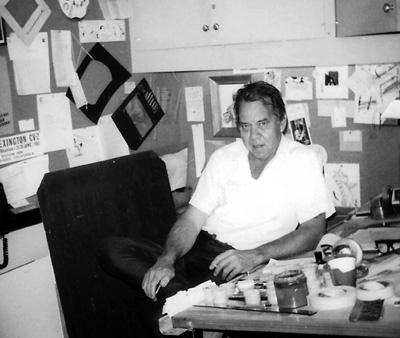
How Did That Happen? (No. 3)
Has Anybody Here Seen Kelly?
Bookmarks

Flowers and Trees in Black and White
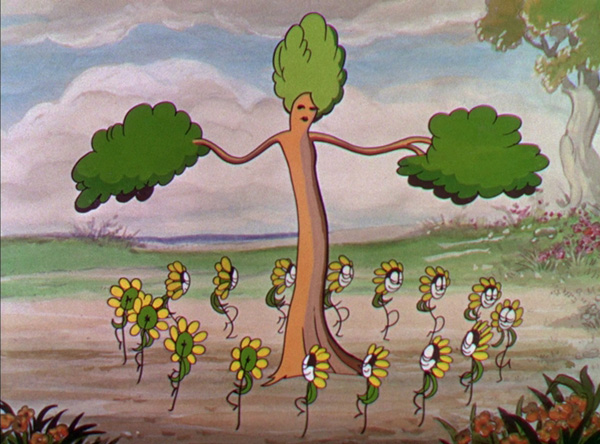
Now, twenty years on past that, I am giving Hollywood Cartoons a nice slow re-reading, and enjoying it very much. It is fun to read about The Three Little Pigs or Playful Pluto, for example, and then to go on YouTube and immediately see what Art Babbitt or Fergie did that you were talking about. I know it was not so easy back when you were viewing all those cartoons in your research. I also began by viewing 16mm copies of cartoons on an editor, before even VHS tapes became available. Today I animate on paper but ink and paint digitally and output my work as digital movies, yet I began with cels and cel paint. One TV commercial shoot was almost ruined when a few key cels were forgotten on top of a kitchen refrigerator, where they had been laid out to dry.
Cottrell was only a camera operator at that time. Perhaps he believed it because someone told him it was so, but I maintain it would have been a crazy thing even to try. What do you think?
The Year of the Knees
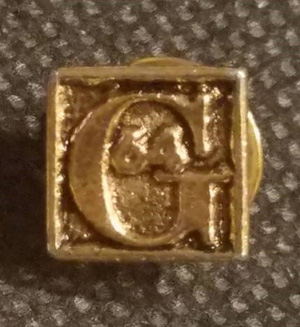
More on Walt's Goldwater Pin
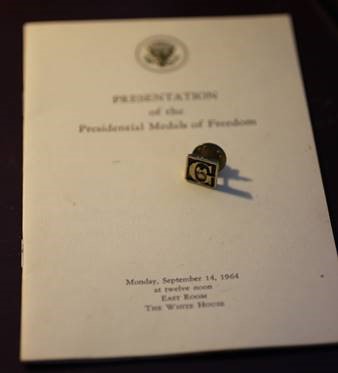
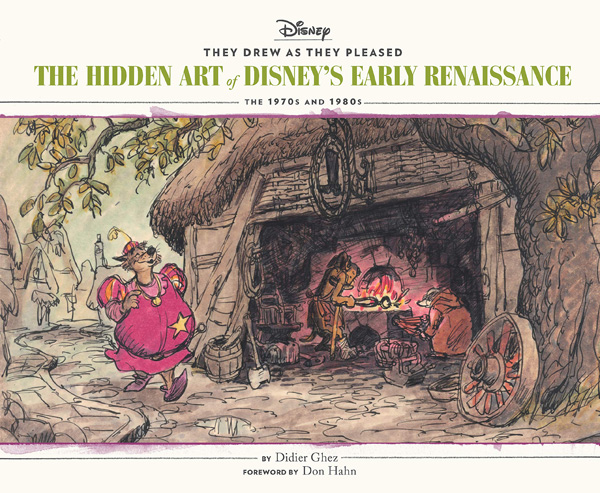
More Disney Art Brought Out of Hiding
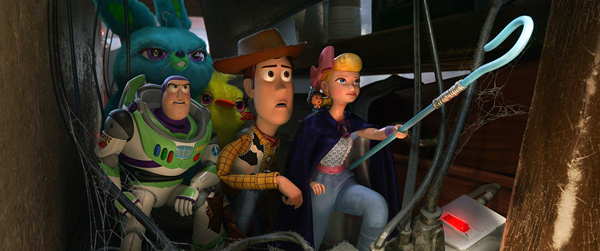
Toy Story 4
While I Was Away...
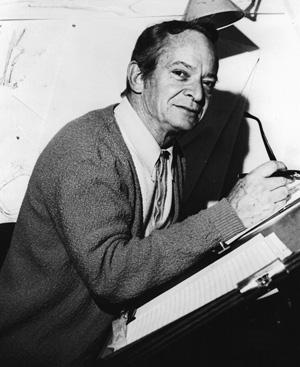
Interviews: Four With Maurice Noble
A Cautionary Tale
Oh, Pooh!
How Did That Happen? (No. 2)
How Did That Happen?

Presidents I Have Seen

They Came in the Mail...
Interviews: Novros, Hurtz, and Julian
Bigger and Better Barks
A Little More About Will Vinton

Will Vinton in a publicity photo taken around the time of his Claymation feature The Adventures of Mark Twain (1985).
Will Vinton

Pooh for the Connoisseur
Pod People
Picture Books
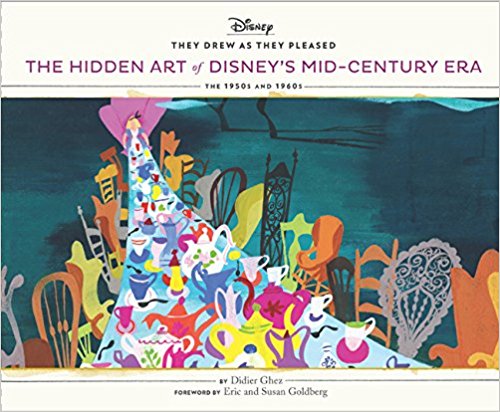 A much better "Disney book" is the fourth volume in Didier Ghez's They Drew as They Pleased series, this one titled "The Hidden Art of Disney's Mid-Century Era." Like the earlier books in the series, the new one offers up the annotated work of a handful of Disney concept artists, in this case artists who were active in the 1950s and 1960s, including John Dunn, Walt Peregoy, and Tom Oreb.
Hames Ware
Bear Sighting in Grand Rapids
Ron Robinson
The Ten-Cent Plague
The Return of the Native
Incredibles 2
Coming Attractions
Getting Back to Business, Slowly
A Big Dreamweaver Headache
Who Is This?
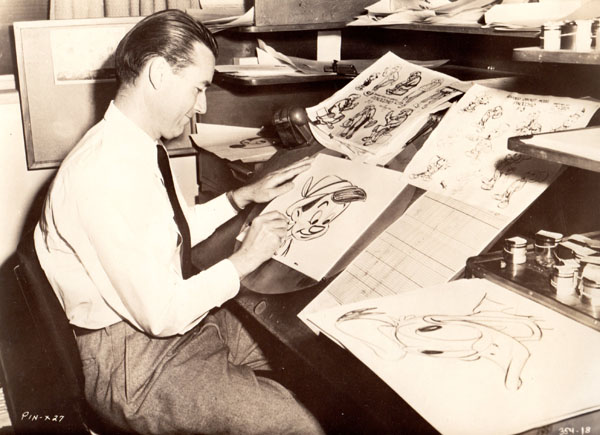
Merrill Remembers a Native Son (Just Not Very Well)
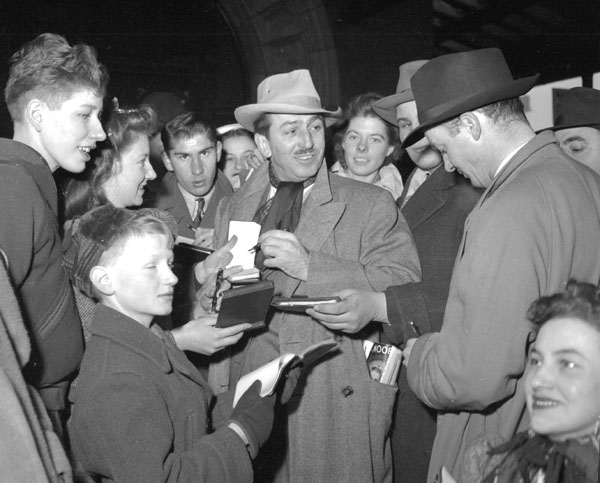
Changing Trains in Chicago
Isle of Dogs
Speaking of The New Yorker...
As I Was Saying...
John K.
Phantom Books
And, Finally, Telecomics...
Telecomics Rides Again
Telecomics Lives!
Stanley, or Not
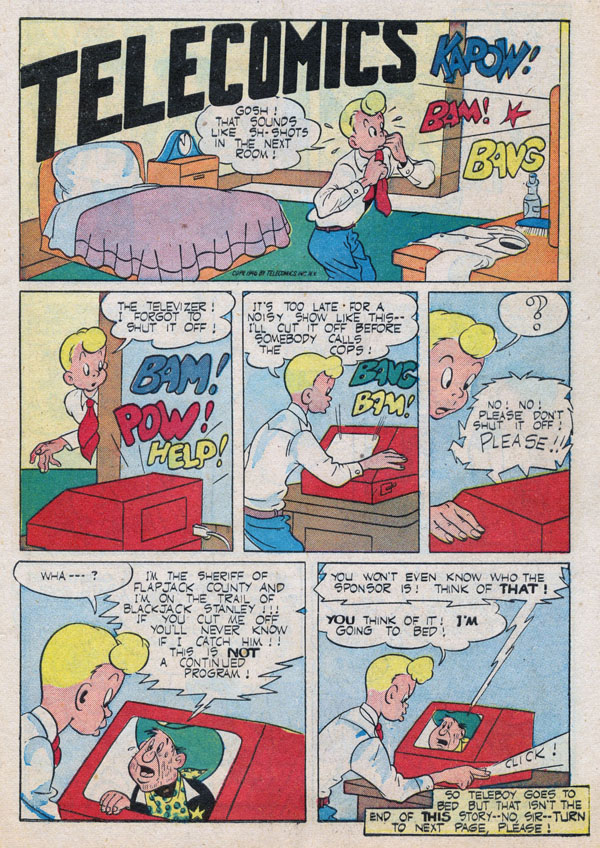
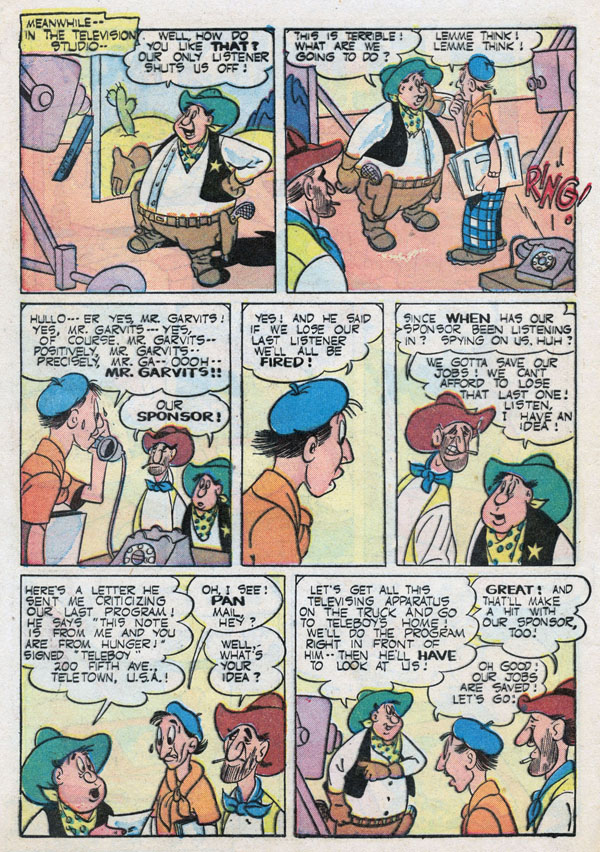
Flipping Out
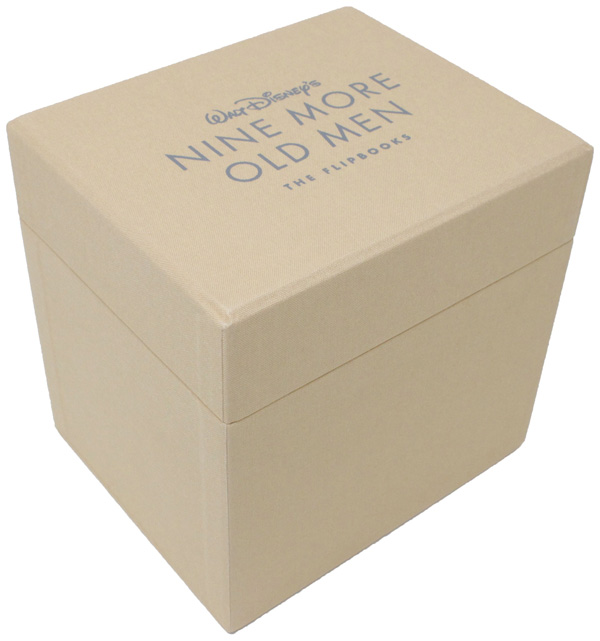
Pogoing
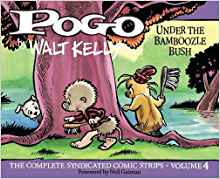 Volume 4 of the complete syndicated Pogo was published by Fantagraphics last month, with Mark Evanier and Eric Reynolds filling in for the lamentably deceased Carolyn Kelly and Kim Thompson as the series' editors. Here's what I wrote to Mark recently:
Lutz Redux...
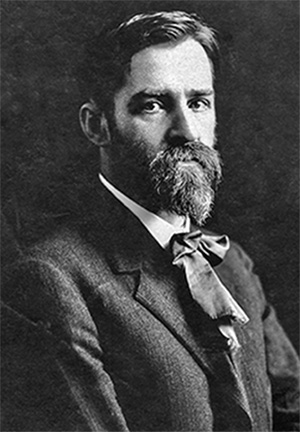 The name E. G. Lutz should be familiar to you if you're at all acquainted with the early history of American animation. If it's not, turn to the indexes in my books Hollywood Cartoons: American Animation in Its Golden Age and The Animated Man: A Life of Walt Disney. Lutz was the author of Animated Cartoons: How They Are Made, Their Origin and Development (1920), the first book-length treatise on how to make cartoons. This was the book that Walt Disney got from the Kansas City Public Library soon after he went to work for Kansas City Film Ad, and that he and his earliest co-workers and employees, like Hugh Harman and Friz Freleng, used as a guide when making their own cartoons.
Unfinished Business
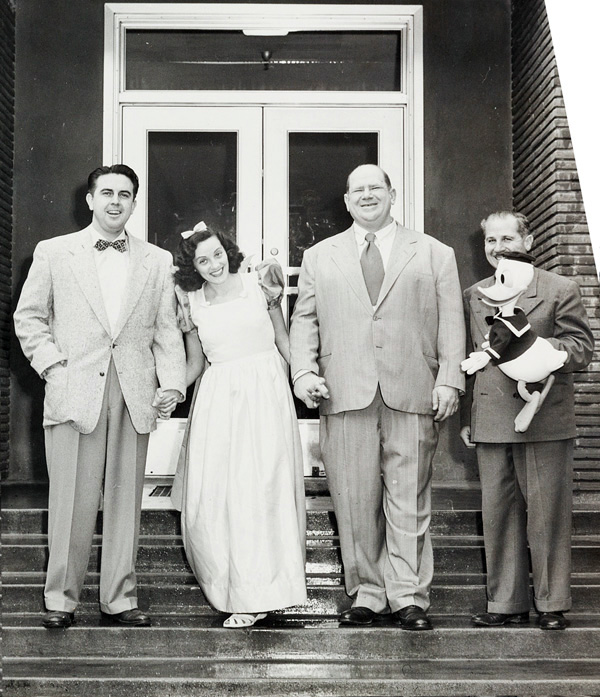
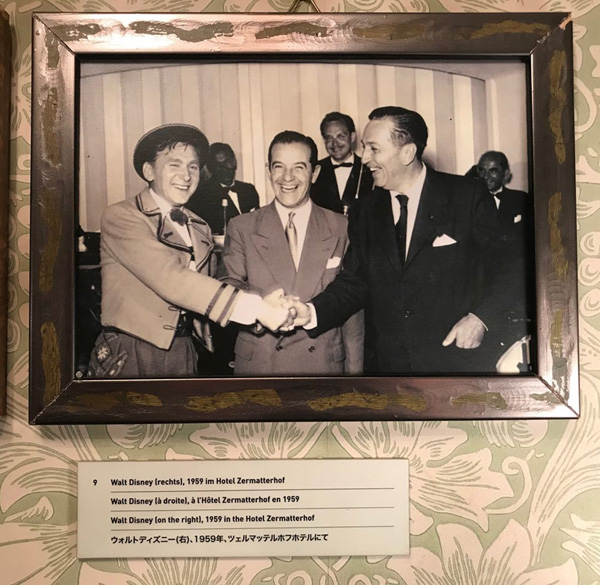


Coco
S-s-s-son of a B-b-b-b...
Porky Pig 101 Revisited
Move Along, Nothing to See Here
 While I've confirmed such problems in my own viewing of the cartoons, I've been more disturbed by the evident variable quality of the sources used. I don't understand why, for example, Porky's Badtime Story, the first Looney Tune directed by Bob Clampett, looks so bad. It can't be because satisfactory source material is lacking; I would have been happy to lend Warner my own 16mm print of that cartoon if anyone had asked.
Walt in the Dominican Republic
Overdue Books
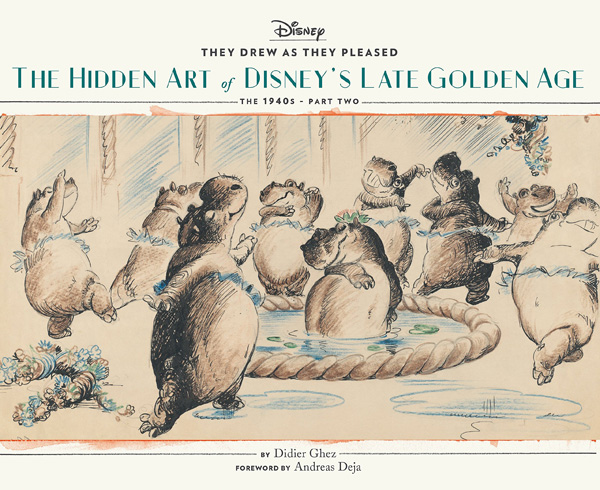
More Barrier Books
Books in Review (or Not)
Stanley and His Monster
In Brief
Following Up
 "Jake": I mentioned last month, when I was writing about "Jake," my decidedly former literary agent, that he and I shared only one Facebook friend, the excellent caricaturist Drew Friedman. As I suspected, and is so often the case with Facebook "friends," the connection between Jake (his real name, actually) and Drew was essentially nonexistent, and Drew unfriended Jake when he read my account of my unfortunate dealings with him.
75 Years of Duck Comics by Carl Barks
Beep! Beep!
Book Marks
The Road to Hell...
Bugs Bunny, Packing Heat
When Mickey Mouse Turned Five
 While the accompanying photo with Mickey and Bela Lugosi has been widely associated with Mickey's fifth birthday since it was first published in the Motion Picture Herald (October 7, 1933), most Disney historians since that time have been unaware of the true location of the event and of the other individuals pictured in the photo.
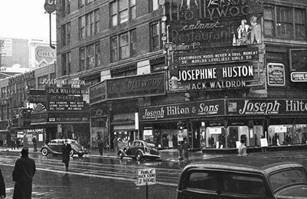 However, the event was actually held at the Hollywood Restaurant (aka Hollywood Cabaret Restaurant) at 47th and Broadway in New York City. The event was hosted by Mickey's new film distributor, United Artists.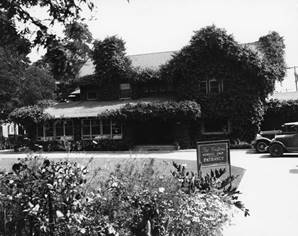
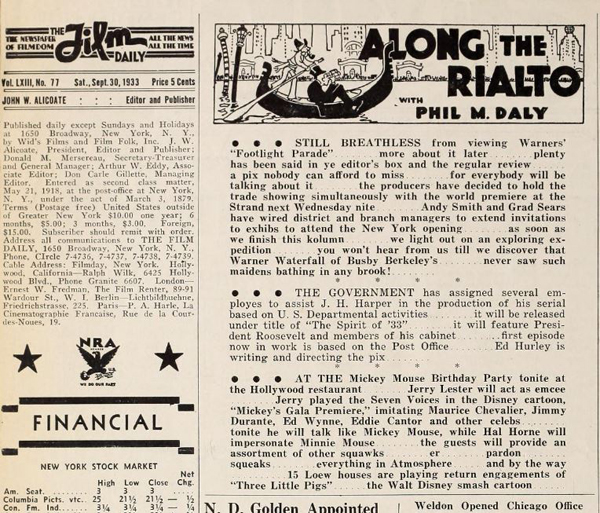
A Museum Tour with Will Eisner (2000)
The Writing Life, Cont'd
John Canemaker's New Blog
Schickel Thoughts
Partying at La Martinique
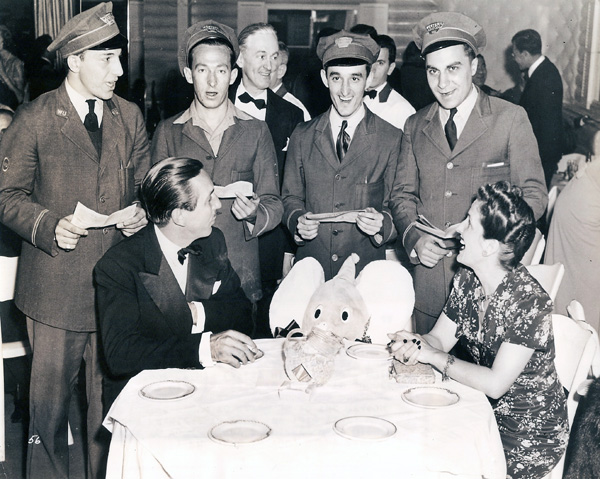
 Back in March 2009, I posted this photo taken in New York on October 23, 1941, the evening of the premiere of Dumbo at the Broadway Theater; Fantasia had ended its run there two days earlier.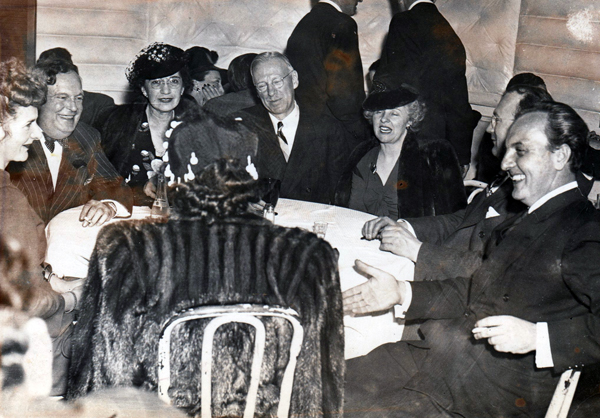
Oskar Lebeck (at right), the New York-based editor of Western Printing & Lithographing's Dell comic books, entertains a group at La Martinique that includes, from left, his wife, Ruth Lebeck; Leon Schlesinger, producer of the Warner Bros. cartoons; Mary DuBois, wife of Gaylord DuBois, Lebeck's star comics writier; Harold Spencer, general manager of Western Printing's Poughkeepsie plant; Spencer's wife, Todd; and Gaylord DuBois. The woman with her back to the camera may be either Schlesinger's wife, Bernice, or Helen Meyer, vice president of Dell Publishing.
As I Was Saying...
I last posted here in January. I don't think I've ever before let so much time pass without posting. The reasons for my silence have been mostly related to health, my own and my father-in-law's. I hesitate to post about personal matters here, but I know that some people have continued to check the site frequently, and they may appreciate an explanation of what's going on.
The Writing Life
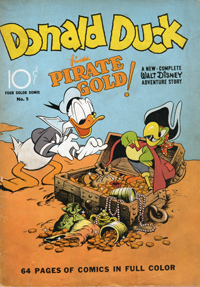 I've done a little writing while the site was dormant, including notes for the second volume of IDW's reprints of the Sunday page called Walt Disney's Treasury of Classic Tales. I've also written an introduction for Theme Park Press' reprint of Gerald and Danny Peary's pioneering 1980 anthology The American Animated Cartoon.
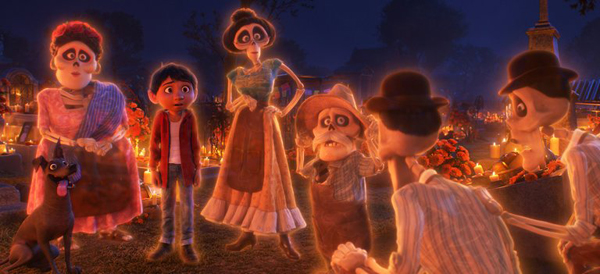
Quick Links
New to the site? Click here to go to a page that explains what it's all about.
To comment on anything on the site, write to me at the following address: michaelbarrier@comcast.net. I’ll assume that your comments are intended for publication unless you specify otherwise.
Each item listed below is linked through a "named anchor" to the corresponding posting on this home page. Each of those links is valid for as long as the item remains on the home page, but there's also a permanent link at the end of each item that will take you to the appropriate archival page.
The stand-alone pages—under the heads Commentary, Essays, etc.—all have permanent URLs.
Recent Postings
September 14, 2020:
June 5, 2020:
February 11, 2020:
December 7, 2019:
October 10, 2019:
Flowers and Trees in Black and White
September 18, 2019:
August 10, 2019:
August 2, 2019:
More Disney Art Brought Out of Hiding
July 19, 2019:
June 15, 2019:
Interviews: Four With Maurice Noble
January 24, 2019:
December 18, 2018:
December 14, 2018:
December 9, 2018:
November 24, 2018:
November 6, 2018:
Interviews: Novros, Hurtz, and Julian
October 24, 2018:
A Little More About Will Vinton
October 16, 2018:
October 11, 2018:
September 16, 2018:
September 14, 2018:
September 10. 2018:
September 3, 2018:
August 31. 2018:
August 17, 2018:
August 14, 2018:
July 14, 2018
Getting Back to Business, Slowly
May 22, 2018:
May 19, 2018:
May 17, 2018:
Merrill Remembers a Native Son (Just Not Very Well)
May 9, 2018:
April 27, 2018:
April 4, 2018:
March 5, 2018:
February 28, 2018:
February 22, 2018:
February 18, 2018:
February 15, 2018:
February 12, 2018:
January 23, 2018:
January 14, 2018:
December 13, 2017:
December 11, 2017:
December 6, 2017:
November 29, 2017:
Move Along, Nothing to See Here
November 27, 2017:
Walt in the Dominican Republic
November 8, 2017:
October 16, 2017:
August 28, 2017:
August 8, 2017:
July 28, 2017:
75 Years of Duck Comics by Carl Barks
July 12, 2017:
June 13, 2017:
June 5, 2017:
A Museum Tour with Will Eisner (2000)
May 29, 2017:
May 28, 2017:
May 9, 2017:
May 3, 2017:
John Stanley: Bringing Life to Little Lulu
They Drew as They Pleased: The Hidden Art of Disney's Golden Age: The 1930s
Harvey Kurtzman: The Man Who Created Mad and Revolutionized Humor in America
A Mickey Mouse Reader and two new Disney reprint books
Sick Little Monkeys: The Unauthorized Ren & Stimpy Story
Walt Kelly: The Life and Art of the Creator of Pogo
Reprints of Kelly, Barks, Gottfredson, and Toth
Reprinted Disney comic strips and comic books
South of the Border with Disney and Two Guys Named Joe
Fantastic Mr. Fox and The Princess and the Frog
The Art of Pixar Short Films and The Alchemy of Animation
Tex Avery: A Unique Legacy (1942-1955)
Bolt and Madagascar Escape 2 Africa
The Colored Cartoon: Black Representation in American Animated Short Films, 1907-1954
Dana Gabbard on a comic-book exhibit
Walt Disney's True-Life Adventures
"Il Était Une Fois...Walt Disney"
Walt Disney: The Triumph of the American Imagination [with a list of errors]
Monster House and A Scanner Darkly
The SpongeBob SquarePants Movie
Walt Disney's live-action features
The Incredibles and Shark Tale
The 2002 Walt Disney Treasures
Sinbad: Legend of the Seven Seas
The Art and Flair of Mary Blair
Hollywood Flatlands: Animation, Critical Theory, and the Avant-Garde
The Ren & Stimpy Adult Cartoon Party
The Animator's Survival Kit and Walt Disney's Nine Old Men and the Art of Animation
The Immediate Experience and Reading the Funnies
Winsor McCay: His Life and Art
A Day in the Life: Walt Kelly, 1969
Filming Third Man on the Mountain
Two Big Months in Disney History
Bob Clampett and "Tarzantoons"
From Hollywood Cartoons: UPA, 1944-1952
Visiting the Walt Disney Family Museum
A Day in the Life: MGM, March 4, 1953
Oskar Lebeck, John Stanley & Friends
Roger Armstrong Remembers Life at Lantz, 1944-45
The Mysterious Dumbo Roll-A-Book
A Day in the Life: Disney, June 12, 1935
Walt's Adventures in the Ivy League
A Day in the Life: Disney, 1931
Elias Disney's "Biography of the Disney Family in Canada"
A Day in the Life: Disney, June 20, 1938
From 1992: On the Jones-Avery Letter
Two Days in the Life: Kansas City, 1922
A Day in the Life: Disney, January 1930
A Day in the Life: Walt Kelly, 1955
A Day in the Life: Disney, February 1927
A "Golden Age" Comic Book Script
Where Walt Was: Honolulu, August 1934
My Journey to the Great White North (Ottawa 2007)
Walt Disney's Goldwater Button
Diane Disney Miller on Neal Gabler
Fantasia: Uncle Walt and the Sacred
Paul Hindemith Meets Walt Disney
In Walt Disney's Missouri: Kansas City
In Walt Disney's Missouri: Marceline
A Few Thoughts About Interviews
European Journal: Disneyland Paris
This part of the site includes the now-concluded debate between John Kricfalusi and MB about cartoon acting and related subjects. There's also a page devoted to reader reaction to the debate.
You can also find reader comments (and MB replies) on these subjects, among others; go to the Feedback home page for a complete list:
Clampett, Jones, and Warner Bros.
Japanese Animated Features (and Related Matters)
The Mysterious Dumbo Roll-A-Book
Pixar, DreamWorks, and Related Matters
Huemeresque: The Battle of Washington
Jones: From Night Watchman to Phantom Tollbooth
Watership Down and Lord of the Rings reviews
Raggedy Ann & Andy and Wizards reviews
Ralph Bakshi and Fritz the Cat
Jack Kinney and Jane Kinney (1976)
Frank Thomas and Ollie Johnston (1987)
Frank Thomas and Ollie Johnston (1976)
Flip Book
On Links
The following are not so much "recommended" links as "links of interest" because of their subject matter. Their reliability and value varies greatly.
Links: Animation-related Sites
Animation - Who & Where (Joe Campana)
Animation Treasures (Hans Bacher)
The Animator's Survival Kit (Richard Williams)
Baby Ruthy's Blog (Ruth Clampett)
Blackwing Diaries (Jennifer Lerew)
Bray Animation Project (Tom Stathes)
Colorful Animation Expressions (Oswald Iten)
Comedy for Animators (Jonathan Lyons)
Conversations on Ghibli (Daniel Thomas MacInnes)
The Demon Duck of Doom (Nancy Beiman)
Early New York Animators (Charlie Judkins)
John the Animator Guy (John Celestri)
Likely Looney, Mostly Merrie (Steven Hartley)
Network Awesome: The Films of Michael Sporn
Out of the Inkwell (Mike Dobbs)
Popeye Animator ID (Bob Jaques)
Ramapith: David Gerstein's Prehistoric Pop Culture Blog
Spline Doctors (Pixar animators)
Temple of the Seven Golden Camels (Mark Kennedy)
Toon In...to the World of Animation (podcasts).
Uncle Eddie's Theory Corner (Eddie Fitzgerald)
What About Thad (Thad Komorowski)
Links: Comics Sites
The Good Artist (Joseph Cowles)
Ms. Viagri Ampleten (Milton Gray)
Noblemania (Marc Tyler Nobleman)
Robert Crumb Cartoons (Dan Rosandich)
Sekvenskonst [Sequential Art] (Joakim Gunnarsson)
Stanley Stories (about John Stanley of Little Lulu)
Stripper's Guide (Allan Holtz)
The AAUGH Blog (about Peanuts)
Links: Disney-related Sites
50 Most Influential Disney Animators (Grayson Ponti)
Covering the Mouse (Kurtis Findlay)
Disney - Toons at War (David Lesjak)
Disney History Institute (Paul Anderson)
Drawn to Illusion (Vincent Randle)
Encyclopedia of Disney Animated Shorts
Encyclopedia of Disney Animated Shorts Blog
Fantasies Come True (Martin Turnbull)
Golden Gems (Little Golden Books by Disney artists) (Barbie Miller)
Gorillas Don't Blog (Major Pepperidge)
Imaginerding: Home of the Disney Geeks!
Inside Disney Music (David Recchione)
Pickle Barrel (Jordan Reichek)
Sacred Tree of the Aracuan Bird
Storyboard (Walt Disney Family Museum blog)
Thank You Walt Disney/Restoring the Laugh-O-Gram Studio (Kansas City)
Vintage Disney Alice in Wonderland
Vintage Disney Collectibles (David Lesjak)
Links: Film Sites
David Bordwell and Kristin Thompson
Greenbriar Picture Shows (John McElwee)
Something Old, Nothing New (Jaime Weinman)
Links: Music Sites
Cylinder Preservation and Digitization Project